How to Choose a Baby Music Class in Sydney: A Parent's Checklist
Looking at music classes for babies in Sydney? A practical checklist: live music, small groups, calm routines, clear policies and what to ask before booking.
By The Cuddle & Sing team · Published · Last updated · 6 min read
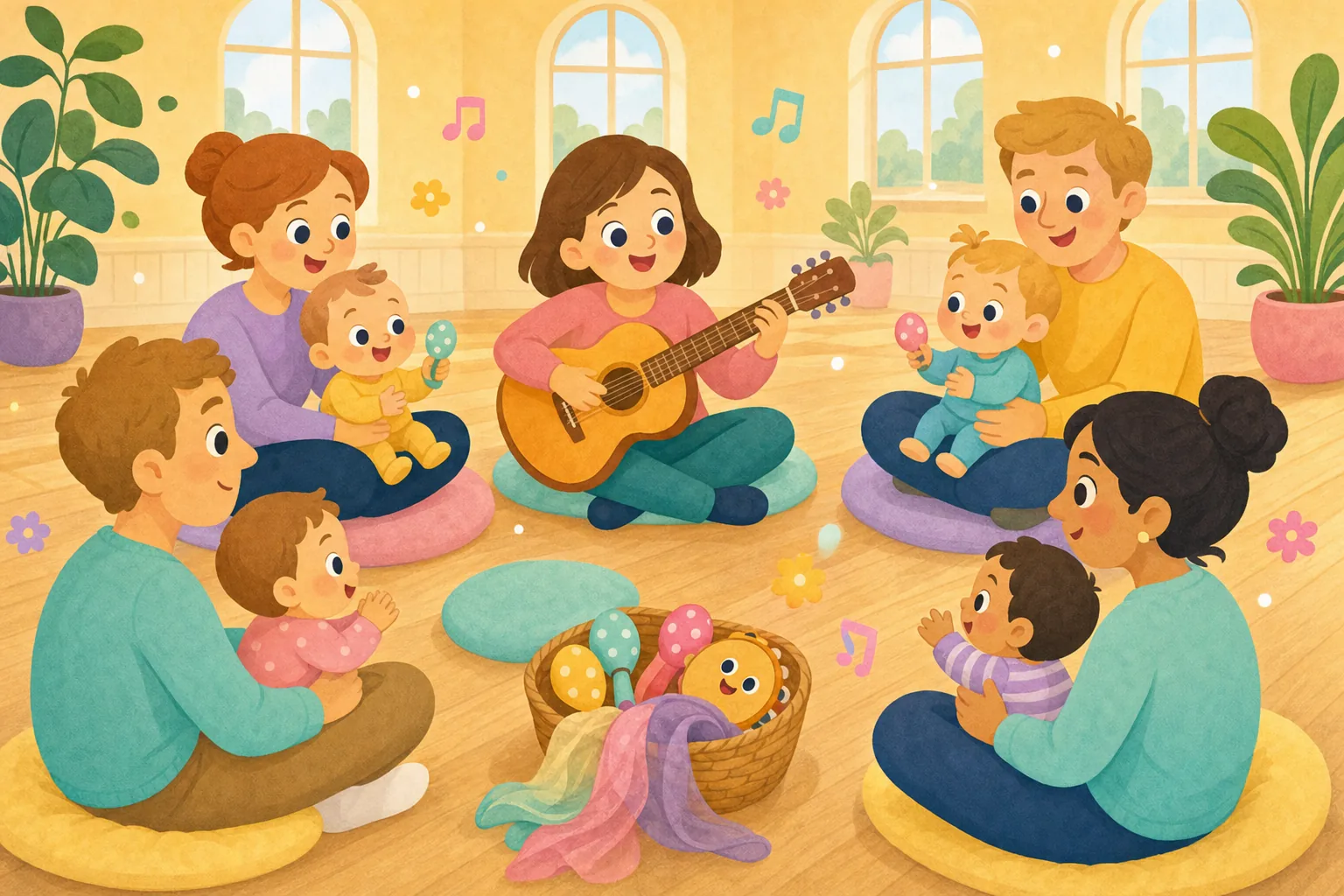
If you are searching for music classes for babies in Sydney, you will quickly find plenty of options and they can look very similar on paper. The short answer is this: a good baby music class has live music, a small and calm group, a routine your baby can come to recognise and a teacher who makes you feel welcome however the morning is going. Everything else is detail you can check with a few simple questions.
We have put together the checklist we would want as parents ourselves. Use it for any class you are considering, ours included and trust your gut when you visit.
The short version
- The best baby music class is the one that suits your baby, your week and your energy, not the busiest timetable.
- Look for live music, small groups, a gentle repeating routine and a teacher who welcomes watching, feeding and wriggling.
- Ask about make-ups, illness, group size and safety checks before you pay for a term.
- An introductory class is the easiest way to see whether a class feels right for you both.
What a good baby music class looks like
Babies do not need a performance. They need warmth, repetition and a grown-up close by. A well-run baby music class is built around those three things.
Live music in the room
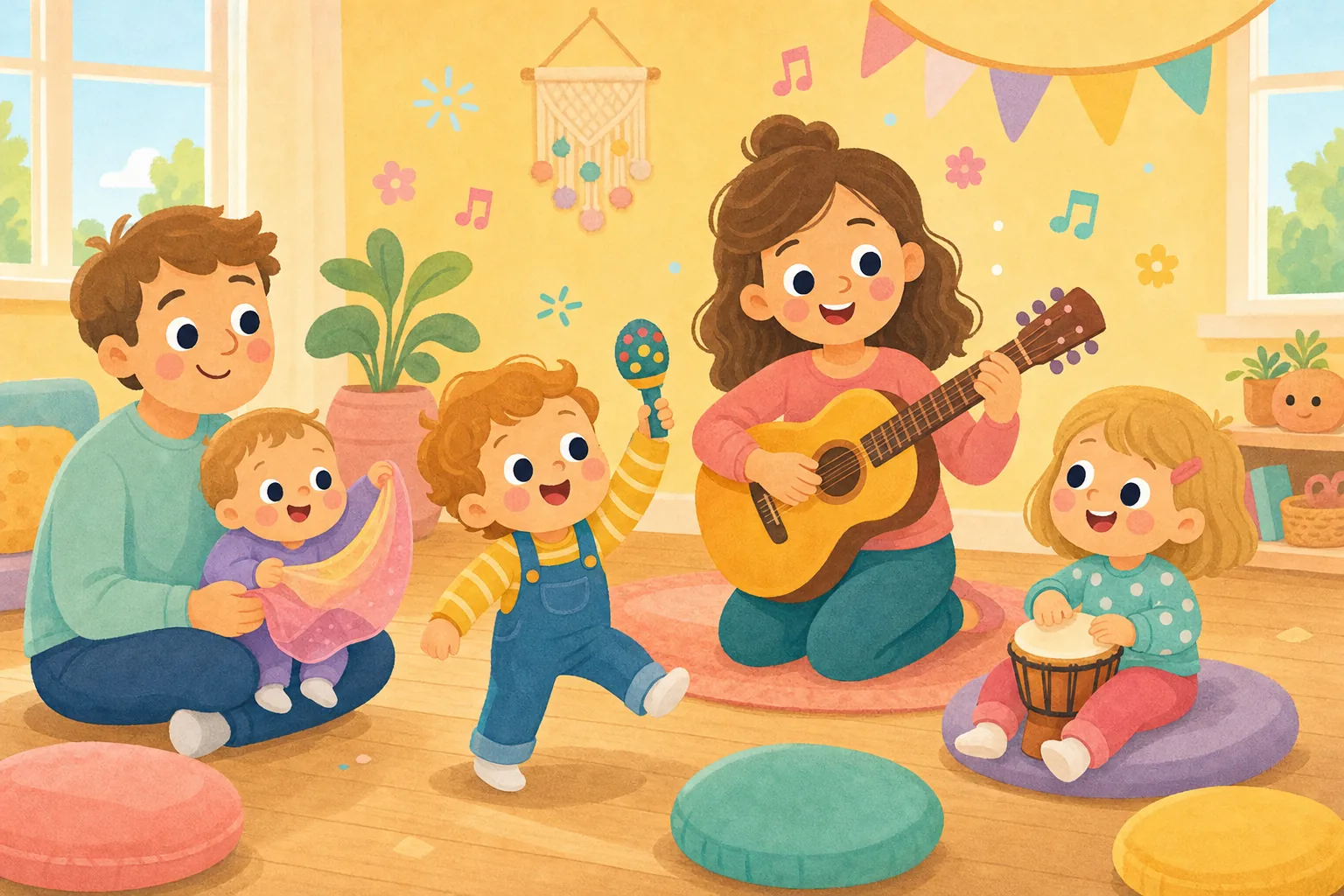
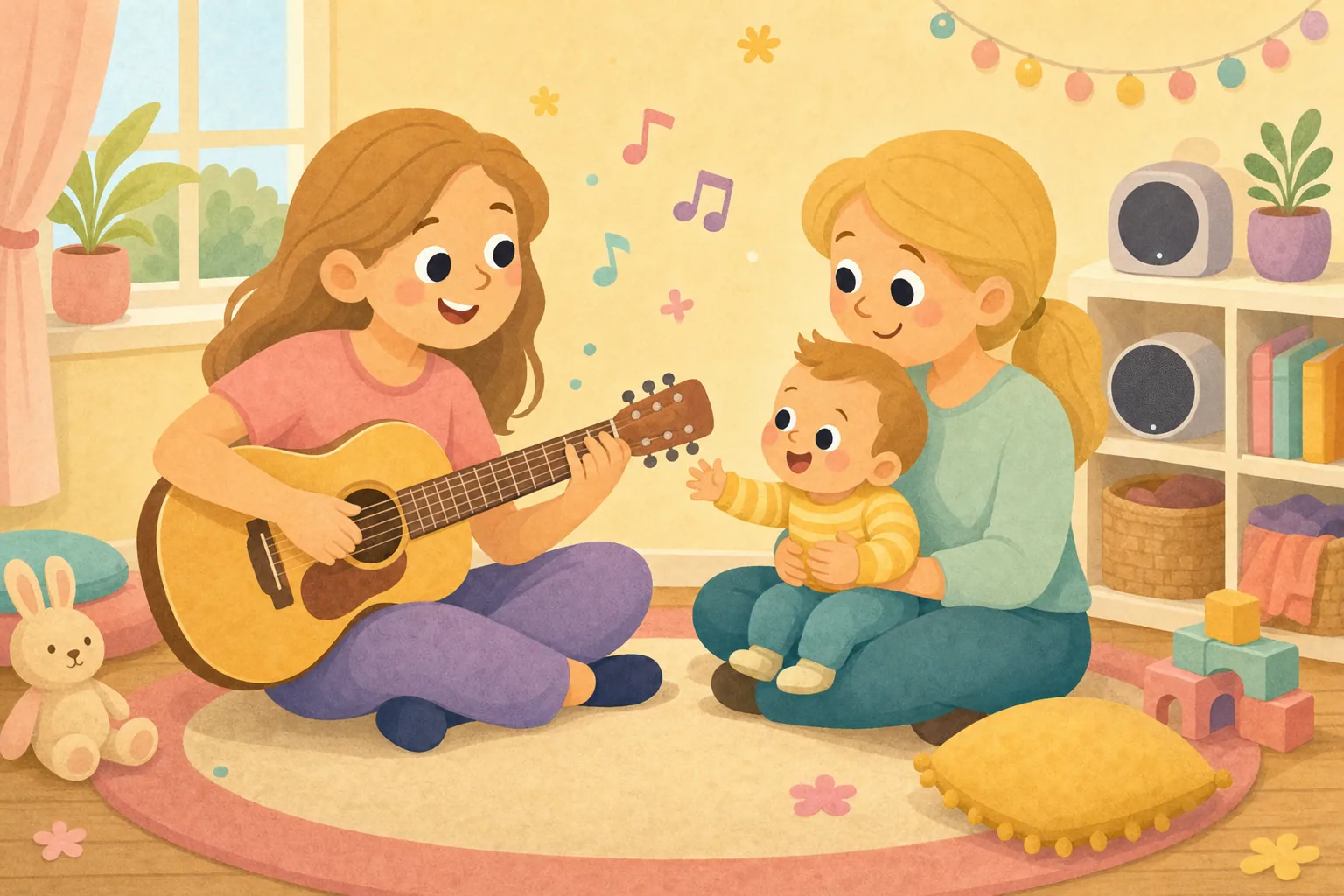
A musician singing and playing live can slow down when a baby is fascinated, pause for a giggle and repeat a favourite bounce. Many families find babies watch a real guitar or drum with real curiosity. We have written more about this in why live music feels different.
A small group
Smaller groups are calmer, less noisy and easier for a teacher to get to know each baby. At Cuddle & Sing we aim for 8–10 children per class, with a maximum of 12. Whatever class you choose, ask how many babies are usually in the room.
You are part of the class
In a baby class your lap is the safest seat in the room. Look for a class where a parent or carer stays for the whole session and is invited to sing, bounce and cuddle, not just watch from the side.
A routine that repeats
A familiar shape (a hello song, some bounces and touch games, a play with props, a quiet listening moment and a goodbye) gives babies something to anticipate week to week. Repetition is a feature, not a lack of ideas.
Is the class right for your baby’s age?
A class for 6-month-olds should feel very different from one for busy two-year-olds. Babies who are not yet walking mostly enjoy lap bounces, touch games, scarves and shakers to grasp and plenty of time to simply listen and look. Once little ones are on their feet, they usually want to march, stomp and explore the room.
Our Baby Tunes class is for babies from about 6–14 months (or until walking) and runs for 30 minutes, a length that tends to suit little attention spans and nap windows. If your child is somewhere in between, our guide to choosing a music class by age may help.
Questions to ask before you book
A friendly provider will be happy to answer these. Clear, written policies are a good sign in themselves.
- How many children are in a class? And is there a maximum?
- Who teaches? Are classes led by musicians and do all teachers hold a valid NSW Working with Children Check?
- What happens if we miss a class? Is there a make-up system and how much notice do you need?
- What is the illness policy? Good classes ask unwell children and adults to stay home and follow current NSW Health guidance.
- How do you clean instruments and props? Babies mouth everything, so this matters.
- Is it term-based, casual or both? And what happens if you need to cancel?
- Can we try a class first? An introductory or trial class takes the pressure off.
You can see how we answer each of these on our FAQ & policies page.
Gentle red flags
None of these mean a class is bad, but they are worth noticing:
- Babies are expected to “perform” or sit still and crying is treated as a problem.
- Very large groups where it is hard to hear the music or move safely.
- The class is mostly recorded music played through a speaker.
- No clear information about cancellations, make-ups or illness.
- Big claims about making babies smarter or speeding up development. Music is a lovely shared experience and every child grows at their own pace.
Timing, naps and getting there
The most practical question is often the most important: will you actually get there happily, week after week?
- Naps: pick a class that sits in your baby’s usual awake window. A mid-morning class works well for many families, but every baby is different.
- Travel: a class 10 minutes away that you reliably reach beats a “perfect” class across the bridge in peak traffic.
- Parking and prams: ask about parking, pram space and whether there are stairs at the venue.
- Feeding and changing: check there is somewhere comfortable to feed and change a nappy.
Our classes are in Crows Nest on the Lower North Shore, with the Hills District coming next.
Making the most of an introductory class
A trial or introductory class is your chance to see the room, meet the teacher and watch how your baby responds. A few tips:
- Arrive a few minutes early so you are not rushing. Babies pick up on our stress.
- Bring water and wear comfy clothes you can sit on the floor in.
- Do not judge the class by one sleepy or grizzly morning. Many babies spend their first class simply watching and that counts.
- Notice how the teacher handles interruptions: feeds, tears, a baby crawling into the middle. Warmth here tells you a lot.
- Ask yourself afterwards: did I enjoy that? Your enjoyment matters too.
You can read about how our introductory class works or see current options and prices on our terms and pricing page.
Our checklist, in one place
- Live music, played and sung in the room
- Small groups with a stated maximum
- Parent or carer stays and joins in
- A repeating, age-appropriate routine
- Teachers with a valid NSW Working with Children Check
- Clear make-up, illness and cancellation policies
- Clean, baby-safe props
- A time and place that fits your week
If our approach sounds like a fit, you are very welcome to book a class and if you have questions first, just get in touch.
Questions parents ask
What age can babies start music classes?
Many baby music classes, including our Baby Tunes class, welcome babies from around 6 months. At that age the class is mostly lap bounces, touch games, gentle props and listening with you.
How long should a baby music class be?
Around 30 minutes suits most babies. It is long enough to settle in and enjoy a full routine, but short enough to fit between naps and feeds.
What if my baby cries or falls asleep in class?
Both are completely normal. A good class lets you step out, feed, cuddle or rest whenever you need to. Watching and dozing are part of the experience too.
Do I need to be musical to join a baby music class?
Not at all. Your baby loves your voice exactly as it is. The teacher leads the music. You just join in as much as feels comfortable.
Are music classes for babies in Sydney term-based?
Many are and some also offer casual visits. Cuddle & Sing offers term enrolment, casual visits and an introductory class for new families. See terms and pricing for details.
This article shares general ideas for families and isn’t medical or developmental advice. Every child is different. If you have questions about your child’s health or development, your GP or Child and Family Health Nurse is a great place to start.
Live music for little ones
Come and sing with us
Cuddle & Sing runs small, musician-led classes for babies and toddlers across Sydney’s North Shore and the Hills, with you right there in the music.