Choosing a Music Class by Age: Babies, Toddlers and Preschoolers
Which music class suits a 6-month-old, a busy toddler or a three-year-old? What music time looks like at each age, and signs your child is ready to move up.
By The Cuddle & Sing team · · 5 min read
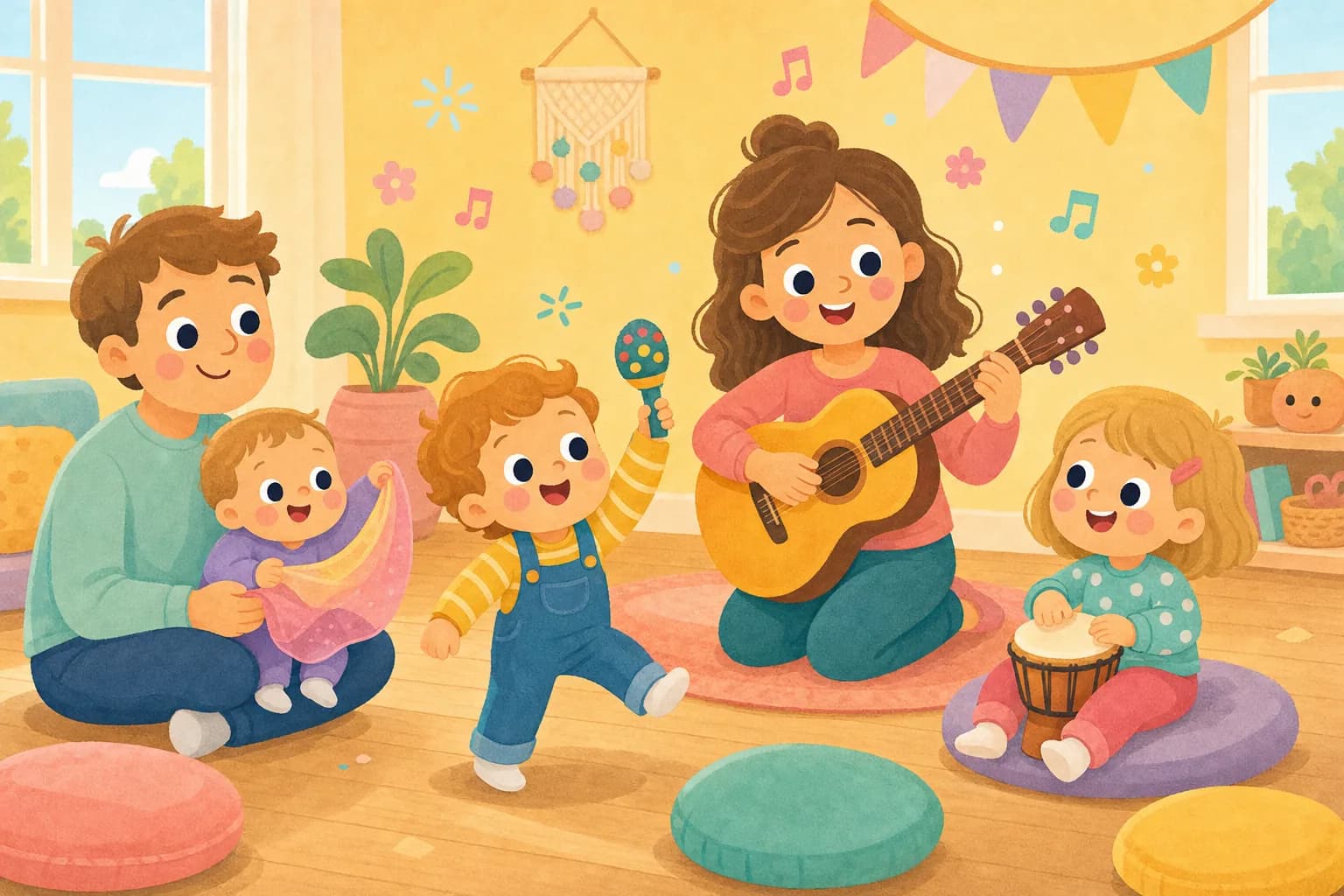
The right music class for your child depends mostly on their stage, not just their age. As a rough guide, babies from about 6 to 14 months suit a gentle lap-based class, toddlers from about 14 to 30 months suit an active class built around movement, and children from about two and a half to three and a half are ready for story-songs, games and a bit of leading. Within those ranges, your child’s walking, energy and temperament are the best tie-breakers.
Here is what music time tends to look like at each stage, how our three age groups line up with it, and what to do if your child sits right on a boundary.
The short version
- Babies (about 6–14 months) enjoy lap bounces, touch games and listening — a calm 30-minute class suits them.
- Toddlers (about 14–30 months) want to move: marching, stop/go games and copying simple rhythms.
- Preschoolers (about 2.5–3.5 years) love story-songs, musical opposites and a turn at leading.
- Ages are a guide. Walking, attention and temperament matter as much as birthdays.
Babies: about 6–14 months
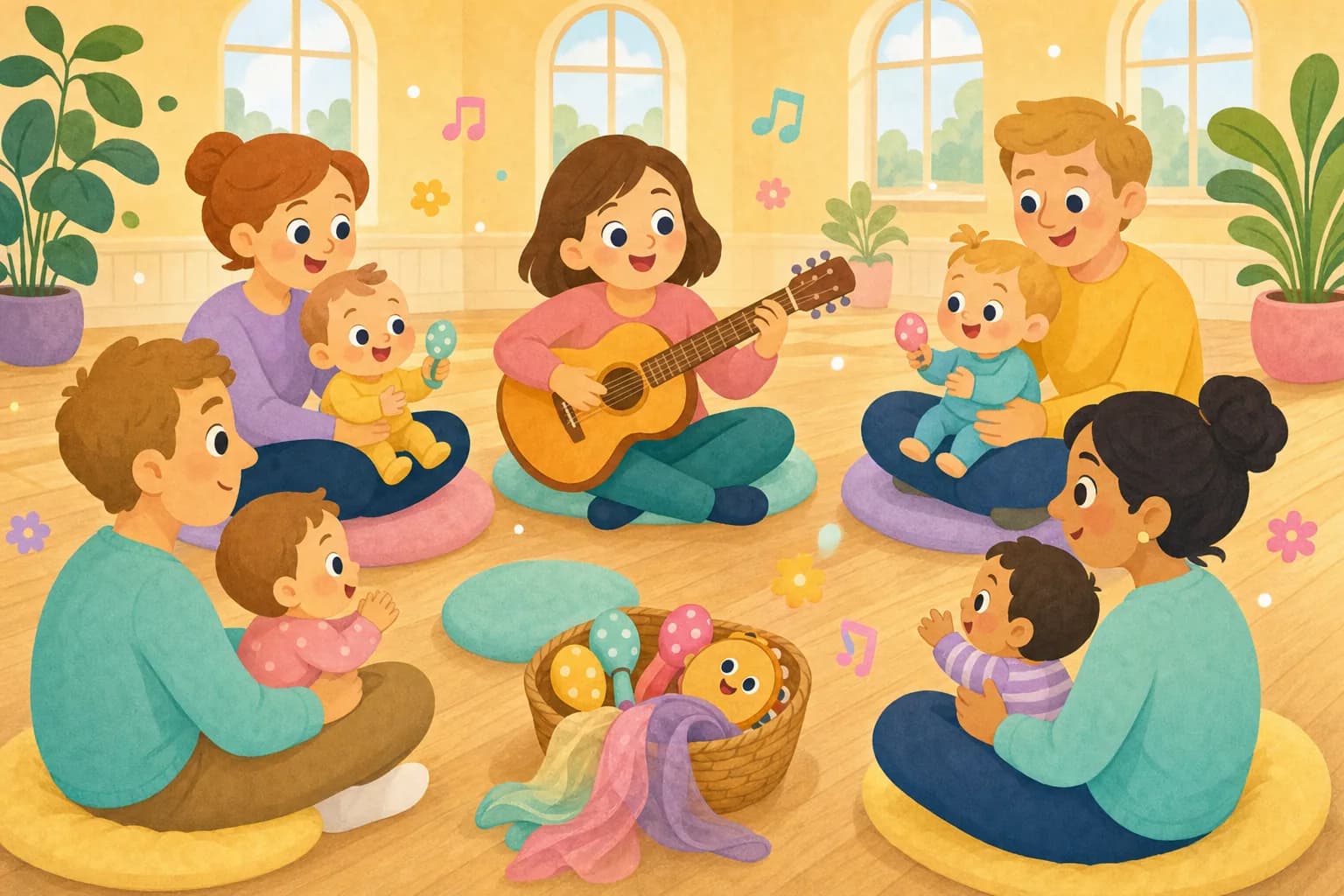
In the first year, music is mostly about closeness. Babies love being bounced and rocked to a steady beat, hearing a familiar voice, watching faces and instruments, and grabbing at scarves and shakers. They may babble back, kick their legs or go very still and stare — all of which are lovely ways of joining in.
What a baby class usually includes
- Lap bounces and rocking songs
- Touch and tickle songs, peek-a-boo games
- Soft props to grasp and explore
- A quiet listening moment with live guitar or gentle percussion
- A lullaby to finish
Our Baby Beat class is for babies from about 6–14 months, or until walking, and runs for 30 minutes so it fits between naps and feeds.
Toddlers: about 14–30 months
Once little ones are up and walking, everything changes. Toddlers want to march, stomp, spin and run — then suddenly sit in your lap and watch. They start copying actions, trying out words in songs and noticing when the music stops.
What a toddler class usually includes
- Action songs with big movements
- Stop/go and fast/slow listening games
- Body-part songs
- Simple rhythm copying on drums and shakers
- A calm wind-down before goodbye
Our Toddler Groove class is for about 14–30 months and runs for 45 minutes. Toddlers often watch first and join in later — watching is joining in too.
Preschoolers: about 2.5–3.5 years
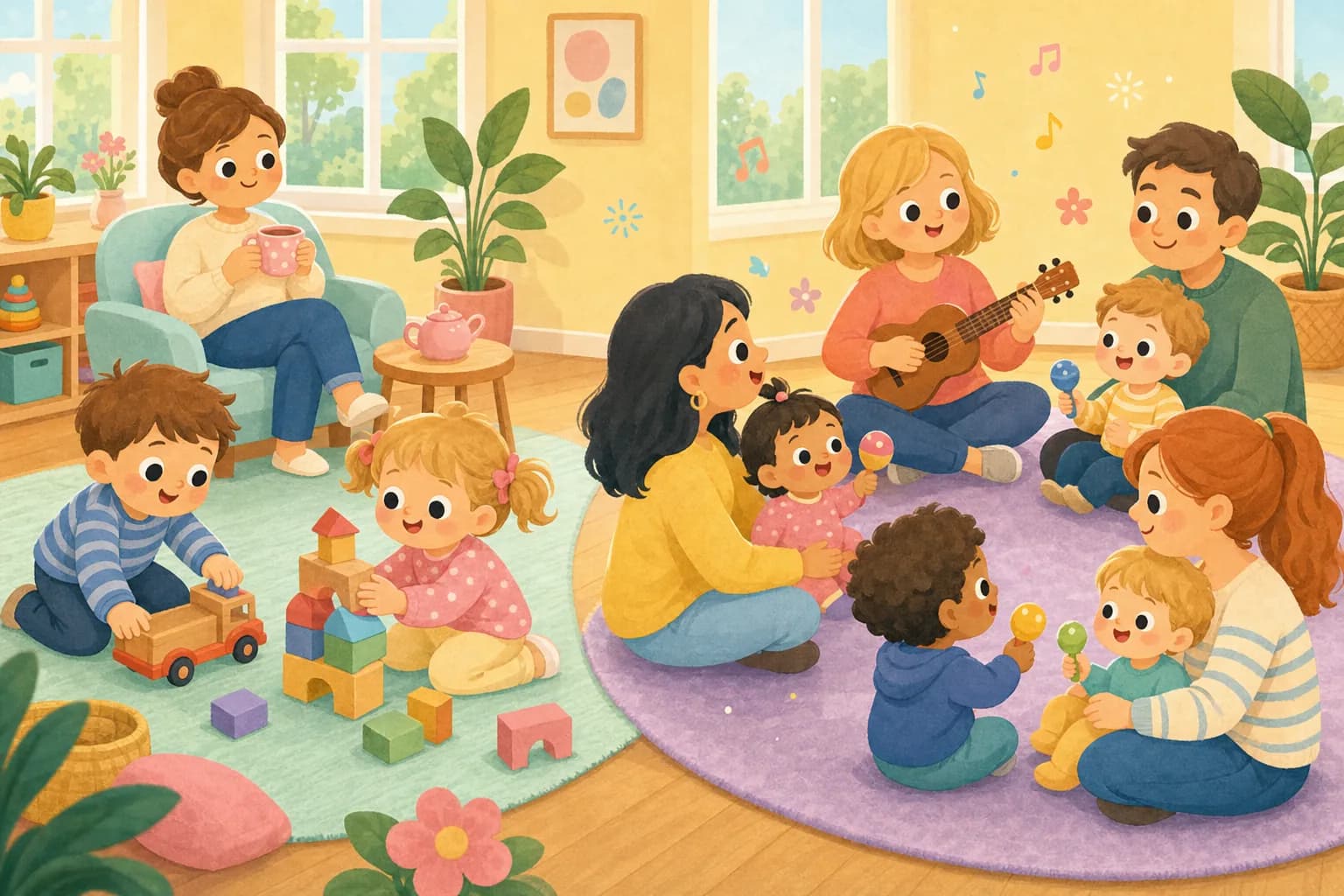
Older toddlers and young preschoolers can listen, move and play at the same time. They enjoy pretend play, longer patterns and having a say. This is a lovely age for musical opposites — loud and quiet, fast and slow — and for story-songs that take the whole group on an imaginary journey.
What a preschool class usually includes
- Movement warm-ups
- Musical opposites games
- Story-song journeys (like catching the ferry to Manly)
- Playing together as a little band
- “Choice moments” where a child picks the next animal, instrument or move
Our Mini Movers class is for about 2.5–3.5 years and runs for 45 minutes.
In between ages: which class should you choose?
Birthdays do not line up neatly with terms, and children do not develop on a timetable. If your child is close to a boundary, think about:
- Walking. For babies, walking is the clearest marker. A confident walker usually enjoys the space and movement of a toddler class; a baby who is still crawling or cruising is often happiest in a lap-based class.
- Energy. Is your child content to sit and listen for a while, or do they need to move? Choose the class that matches how they spend most of their day.
- Temperament. A cautious child may feel more comfortable staying in a familiar group a little longer. A confident one may be ready for more.
- Your week. A 30-minute class can be easier with a young baby; 45 minutes suits toddlers who need time to warm up.
Signs your child might be ready to move up
- They are walking confidently and want to be on the move for most of the class.
- They know the songs and start doing the actions before the teacher does.
- They seem restless in quieter parts of the routine.
- They are reaching the top of the age range for their current group.
With Cuddle & Sing, children can move up or down a group at any point in the term, subject to space, and remaining paid sessions move with them at no transfer fee.
Bringing the class home at every age
Whichever class you choose, the songs do not have to stay in the room. A few ideas to try at home, by stage:
- Babies: sing the hello song during nappy changes, and bounce to a steady beat on your knee.
- Toddlers: play freeze dance in the lounge room, and march around the house banging a saucepan with a wooden spoon.
- Preschoolers: invent a story-song about your trip to the shops, and let your child choose the animal for the next verse.
Repeating favourite songs at home is one of the simplest ways to help a child feel at ease when they come back to class next week. Our rainy-day music games are full of more ideas.
Siblings in different age groups
With two little ones, it can be tempting to put them in the same class. Sometimes that works, but children close in age often get more from a class pitched at their own stage. A few practical tips:
- Look for classes back to back at the same venue, so one trip covers both.
- Ask about sibling pricing — we offer a sibling discount for second and later children, even in different groups. Details are on our terms and pricing page.
- If you need to bring a sibling who is not enrolled, tell us when you book so we can keep the room comfortable and safe.
Questions parents ask
What is the best age to start a music class?
There is no single best age. Many families start around 6 months, when babies enjoy bounces, touch games and listening. Others start as toddlers. Children can enjoy music at every stage.
My baby is 13 months and walking. Baby class or toddler class?
A confident walker often enjoys a toddler class like Toddler Groove, where there is more space to move. If they are only just finding their feet, staying in a baby class a little longer is fine too.
Can my child move to a different group during the term?
With Cuddle & Sing, yes — children can move up or down a group at any time in the term, subject to space, and remaining paid sessions move with them.
Can siblings come to class together?
Siblings can be enrolled in the same or different groups, and second and later children receive a sibling discount. If a non-enrolled sibling needs to come along, please let us know when you book.
How long are music classes for each age?
Our Baby Beat class is 30 minutes. Toddler Groove and Mini Movers are 45 minutes each.
This article shares general ideas for families and isn’t medical or developmental advice. Every child is different — if you have questions about your child’s health or development, your GP or Child and Family Health Nurse is a great place to start.
Live music for little ones
Come and sing with us
Cuddle & Sing runs small, musician-led classes for babies and toddlers across Sydney’s North Shore and the Hills — with you right there in the music.