Music Classes vs Playgroups: Which Suits Your Family?
Music classes or playgroups for your baby or toddler? An honest side-by-side look at structure, cost, your role and routine and why many families do both.
By The Cuddle & Sing team · Published · Last updated · 5 min read
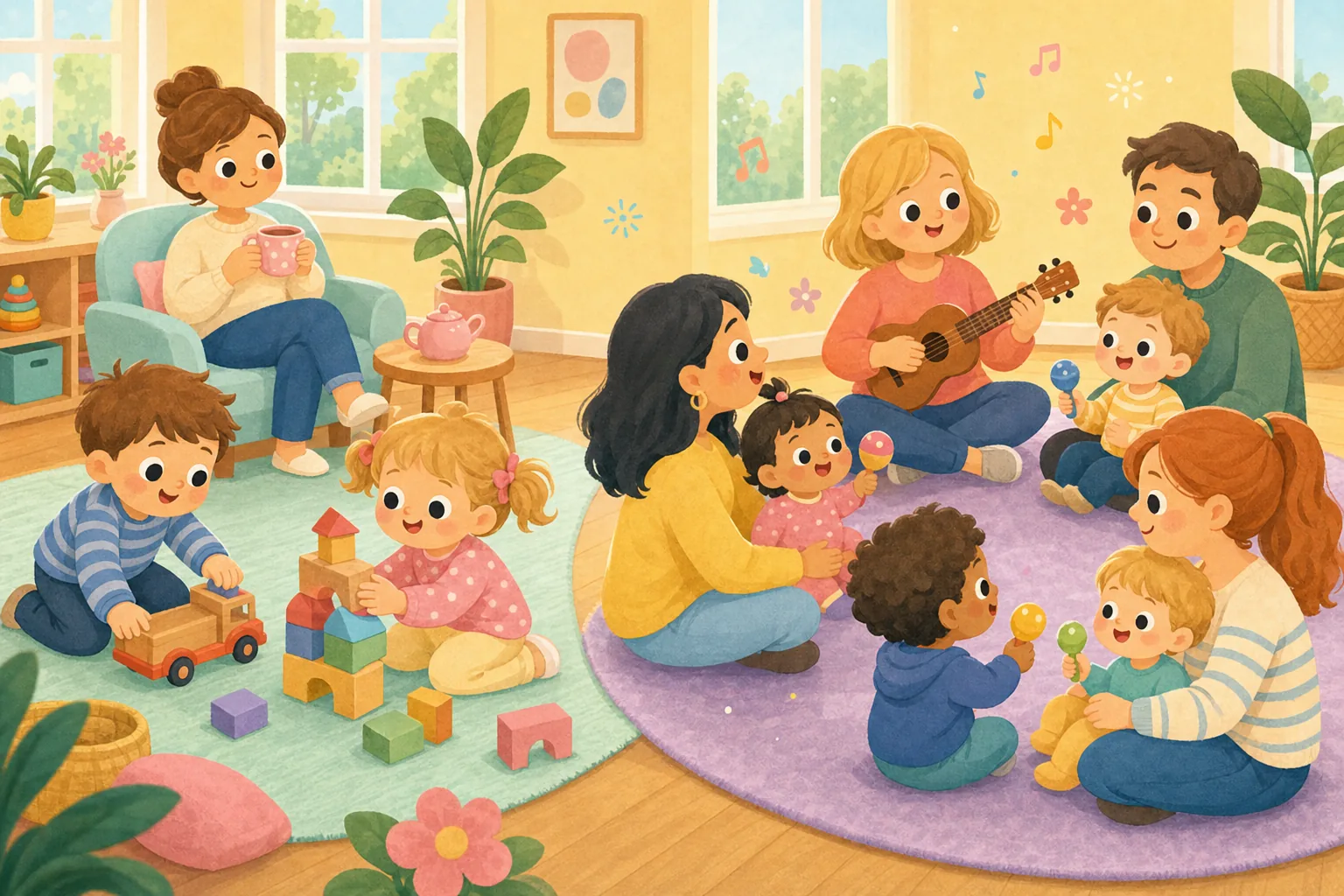
Should you choose a music class or a playgroup for your baby or toddler? Honestly, it depends on what you are after. A playgroup is usually a relaxed, parent-run morning of free play and chat. A music class is a shorter, teacher-led session with live music and a routine that repeats each week. Both are wonderful, they are not in competition and plenty of Sydney families do one of each.
Here is a fair, side-by-side look to help you decide what suits your family right now.
The short version
- Playgroups are mostly free play and parent-run; music classes are led by a teacher and follow a set routine.
- Neither is “better”. They offer different things and many families enjoy both.
- Your child’s temperament and what you need as a parent are the best guides.
- Try a session of each before committing to a term.
What is a playgroup?
A playgroup is an informal get-together where parents and carers bring their children to play. There is usually a room full of toys, maybe some craft or a story, morning tea and lots of time for grown-ups to talk. Many are run by volunteers or community groups and Playgroup NSW is a well-known organisation that supports playgroups across the state.
The heart of a playgroup is free play and community. Children wander, explore and play alongside each other and parents often find a playgroup is where they make local friends.
What is a baby or toddler music class?
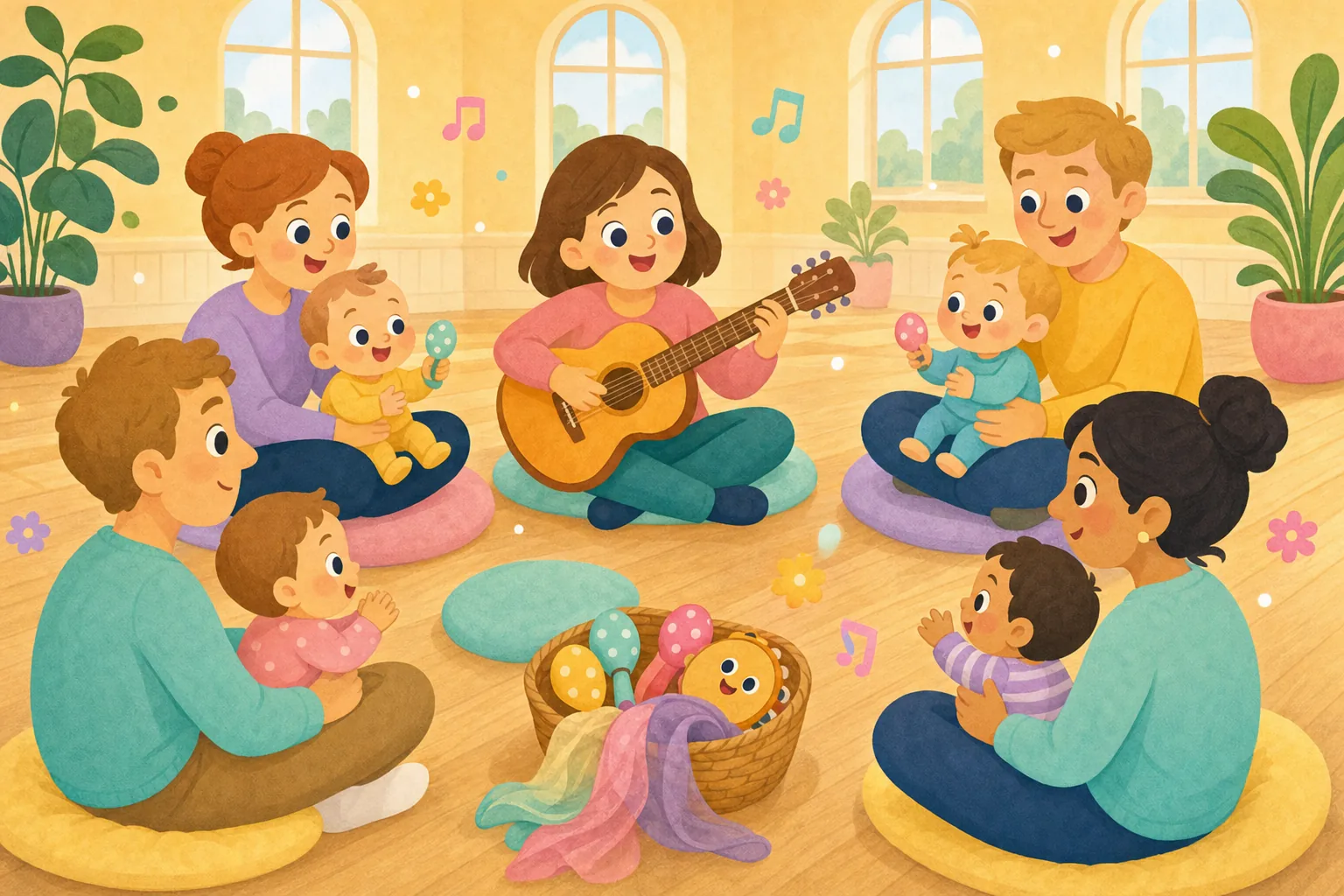
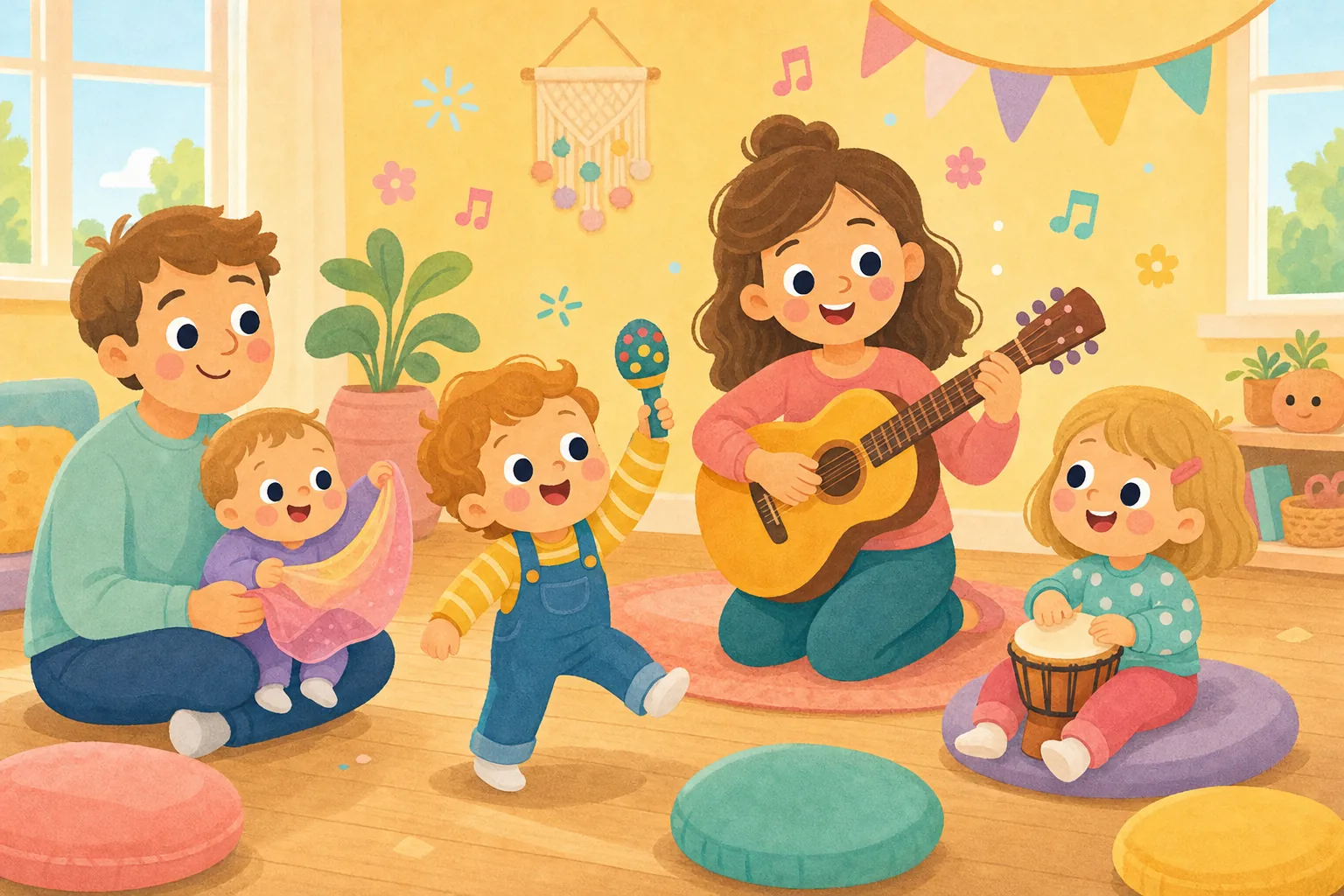
A music class is a planned session led by a teacher. At Cuddle & Sing, for example, a musician plays live throughout and each class follows the same comforting shape: a Hello Song, movement and action songs, instruments, a story-song or listening moment and a calm goodbye. Parents and carers stay for the whole class and join in.
Classes are shorter than most playgroups (30 minutes for babies and 45 minutes for toddlers and preschoolers in our age groups) and are usually booked by the term.
Music classes vs playgroups, side by side
Structure
- Playgroup: loose and flexible. Children choose what to do.
- Music class: a set routine led by a teacher, with room to watch or take a break.
Your role
- Playgroup: supervising, chatting, sometimes helping set up or bring morning tea.
- Music class: singing, bouncing and moving with your child. Someone else does the planning.
Cost
- Playgroup: often low cost, sometimes a small term fee or gold coin donation.
- Music class: a paid class, typically per term or per visit, which covers a trained musician, instruments and a planned program.
Social time
- Playgroup: plenty. It is one of the main reasons people go.
- Music class: a little before and after class and a shared experience with the same small group each week.
Routine and repetition
- Playgroup: different every week, depending on who comes and what is out.
- Music class: familiar songs and rituals repeated weekly, which many little ones come to look forward to.
Noise and busyness
- Playgroup: can be lively, especially with older siblings in the room.
- Music class: small groups and a guided flow, so it is often calmer, though it is still music, so expect some happy noise.
How to decide: think about your child
Every child is different and their needs change fast in the first few years. A few gentle pointers:
- Your little explorer who wants to roam and tip out every box may love the freedom of playgroup and also enjoy the marching and stop/go games of a toddler music class.
- Your watcher who needs time to warm up may find a small, predictable music class easier than a busy playroom. Our article on shy toddlers and music has more ideas.
- Your music lover who bops to every song in the supermarket will probably light up with live instruments.
- Your young baby may simply enjoy being close to you in a calm space with your voice and gentle sounds.
How to decide: think about you
Your needs count just as much. Ask yourself:
- Am I looking for adult conversation and new friends? Playgroup is great for that.
- Would I love someone else to plan the activity for once? A class takes that off your plate.
- Do I want a regular weekly anchor in the diary? Term-based classes give you one.
- How much time do I have? A 30–45 minute class fits easily around naps; a playgroup morning can be longer.
- What is my budget? Playgroups are usually cheaper; classes include a teacher and instruments.
What each looks like at different ages
Babies
With a young baby, playgroup is often more for you than for them: a chance to get out of the house, have a cuppa and chat with other parents while your baby lies on a mat or sits in your lap. A baby music class is gentler and more focused: bounces, touch games and soft sounds, with your baby close to you the whole time.
Toddlers
New walkers usually love the space and toys of a playgroup and the movement of a toddler music class. Some find a busy playroom a bit much and do better with a small, predictable group. Others find a class too structured on a wriggly day and that is fine too.
Preschoolers
By about three, children often start playing together rather than side by side. Playgroup gives them lots of time for that. A preschool music class adds games with rules, taking turns and little moments of leading the group.
Why many families do both
Playgroups and music classes complement each other nicely. Playgroup offers open-ended play and community; a music class offers live music, a shared routine and songs you can take home. Many families find a weekly class plus a playgroup or library rhyme time gives a lovely balance without overloading the week.
If you are curious about the music side, have a look at our approach or see how our weekly classes work. You can also check the locations we are launching in across the North Shore and the Hills.
Questions parents ask
Is a music class or a playgroup better for toddlers?
Neither is better overall. Playgroups offer free play and community; music classes offer live music and a teacher-led routine. Choose based on your child’s temperament and what you need or enjoy both.
Do parents stay at music classes and playgroups?
Yes, at both. At a playgroup you supervise your child during free play. At Cuddle & Sing a parent or carer stays for the whole class and joins in the music.
Are music classes more expensive than playgroups?
Usually, yes. Playgroups are often low cost, while music classes cover a teacher, instruments and a planned program. Our prices are on the terms and pricing page.
Can my baby go to playgroup and a music class in the same week?
Of course. Many families enjoy one structured activity and one relaxed one each week. Just watch for tiredness and keep plenty of quiet time at home too.
This article shares general ideas for families and isn’t medical or developmental advice. Every child is different. If you have questions about your child’s health or development, your GP or Child and Family Health Nurse is a great place to start.
Live music for little ones
Come and sing with us
Cuddle & Sing runs small, musician-led classes for babies and toddlers across Sydney’s North Shore and the Hills, with you right there in the music.