Music and the Shy Toddler: Gentle Ways to Help Them Warm Up
Is your toddler shy at music class? Practical, pressure-free ways to prepare, settle in and enjoy music together, plus home games that build comfort.
By The Cuddle & Sing team · Published · Last updated · 7 min read
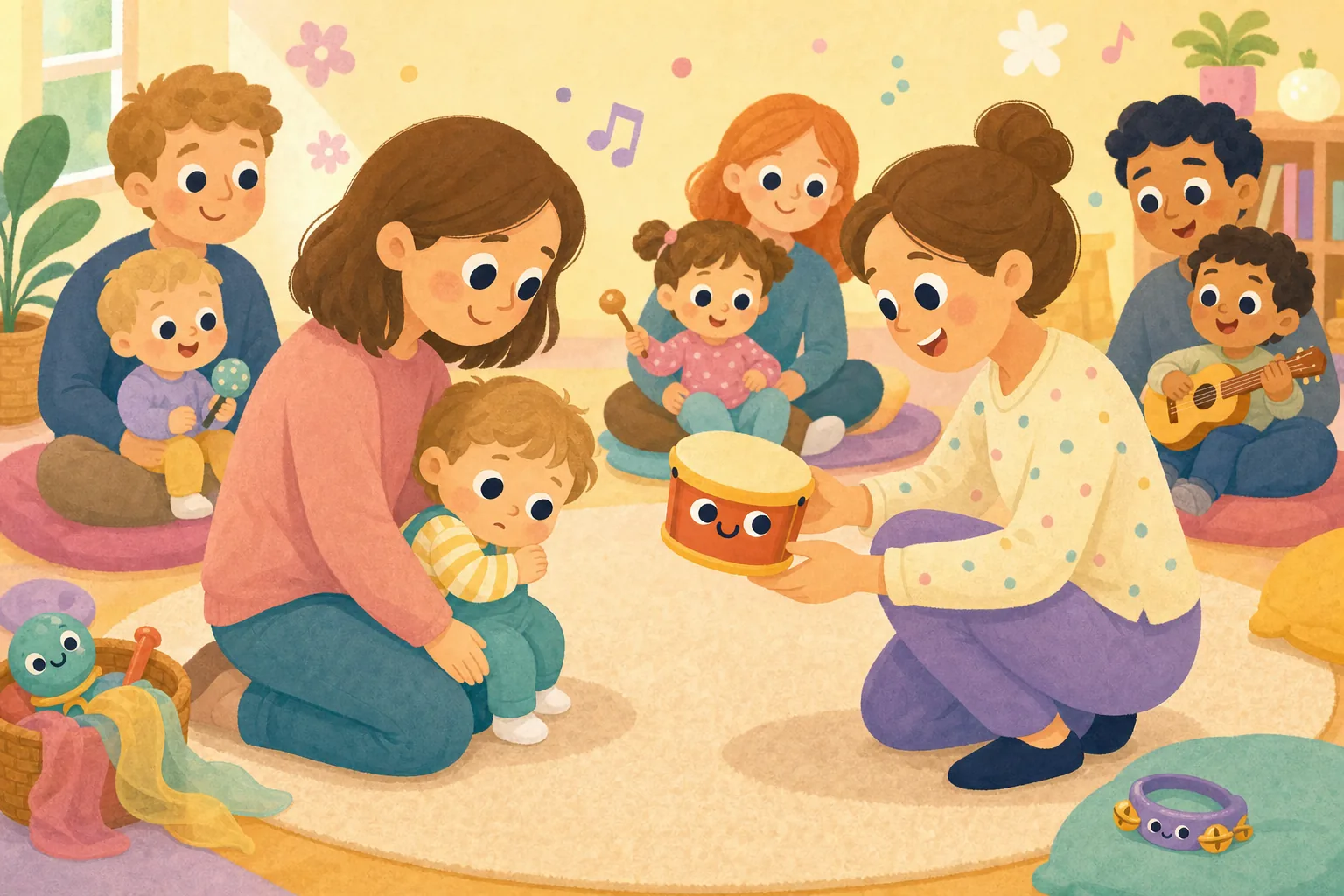
If your toddler hides behind your leg, buries their face in your shoulder or freezes when the music starts, you are not alone and nothing has gone wrong. Many toddlers are cautious in new places and a music class is full of new faces, new sounds and new things to look at. The good news is that music suits shy toddlers well: it is predictable, it repeats and it lets children take part from a distance long before they are ready to step into the middle.
This guide shares gentle, practical ways to help a shy or slow-to-warm-up toddler feel at home with music: before class, during class, after class and in your living room. Every child is different, so take what fits your family and leave the rest.
The short version
- Shyness is a normal part of temperament. Many toddlers simply like to watch before they join in.
- A little preparation at home (talking about class, singing the Hello Song) can make the room feel familiar.
- In class, your lap is home base. Watching counts as joining in and there is no need to push.
- Simple music games at home help shy toddlers practise joining in where they feel safest.
Understanding the slow-to-warm-up toddler
Some children rush into a room and grab the first drum they see. Others stand at the doorway and take it all in. Both are completely normal. Being cautious with new people and places is part of a child’s temperament (the way they naturally approach the world) rather than something to fix.
Shy toddlers are often busy on the inside. While they look still, they may be listening closely, watching what the other children do and working out what happens next. Many parents notice their quiet toddler singing the songs at home, word for word, after a class where they barely moved. That is real participation. It just happened on the inside first.
Preparing a shy toddler before music class
A little preparation can take the surprise out of a new place. You don’t need to make a big deal of it. A few light, cheerful mentions in the days beforehand are plenty.
Talk about it simply
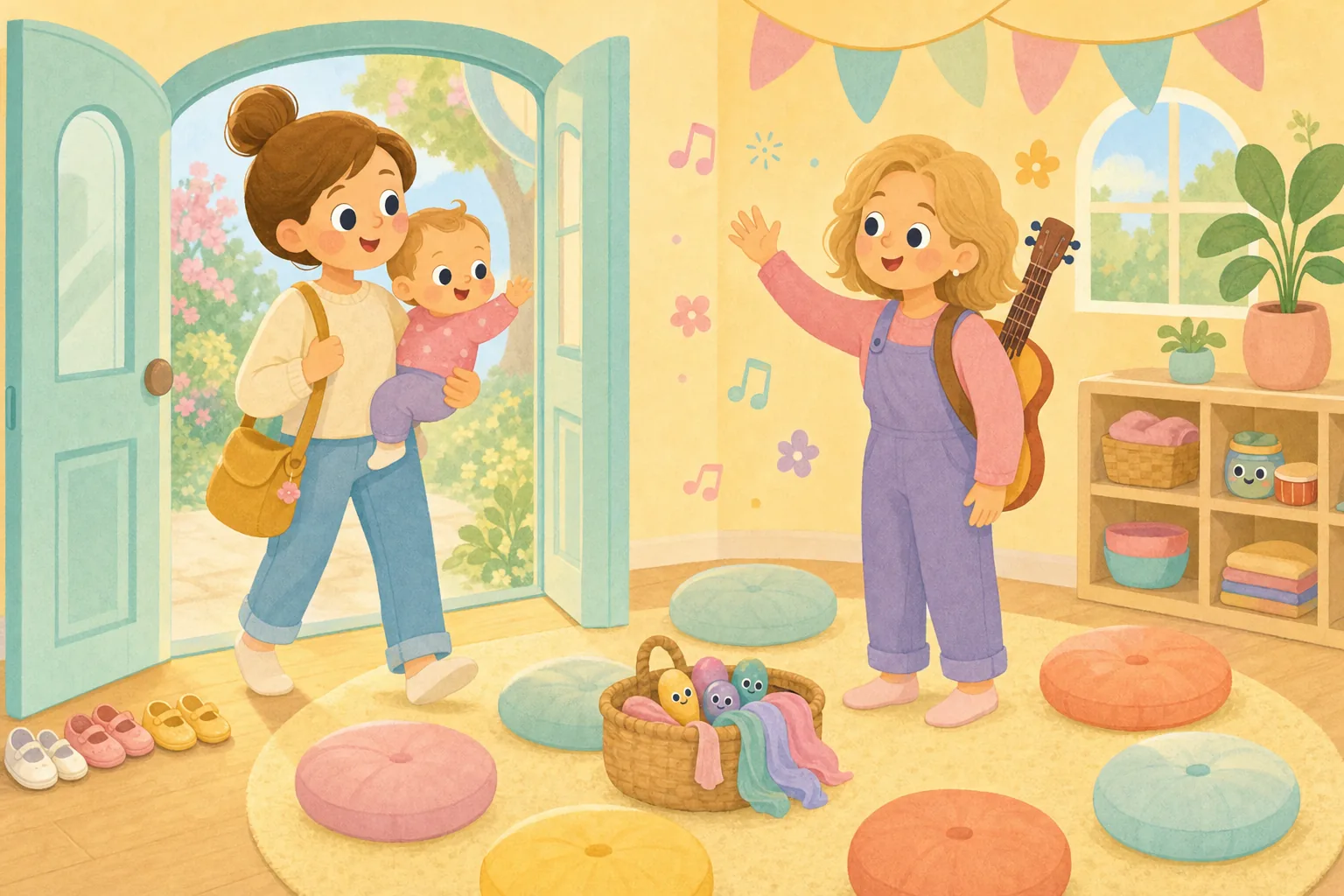
Describe what will happen in plain words: “On Tuesday we’re going to music. There will be a teacher with a guitar, some other kids and their mums and dads and we’ll sing songs together. I’ll be with you the whole time.” Knowing that you stay for the whole class is often the most reassuring part.
Sing the Hello Song at home
Every class starts the same way, with a Hello Song. If you know it (or once you’ve heard it at your first class), sing it at breakfast, in the bath or in the car. When your toddler hears that familiar tune in the room, it can feel like a friend has arrived.
Plan your timing
- Choose a class time that sits well with naps and meals, as a tired or hungry toddler finds everything harder.
- Arrive a little early. Allow around 15 minutes so your child can see the room fill up gradually, rather than walking into a full circle.
- Bring a comfort item if it helps, like a favourite soft toy to “watch” the class too.
Our New families page walks through the practical side of your first visit, so you can feel prepared as well.
During class: letting your toddler set the pace
Your lap is home base
Let your toddler stay as close as they like. Many shy children start on a lap, slide down to sit between your legs a few weeks later and eventually wander off to join a dance, always checking you are still there. Home base never closes.
Sit at the edge of the circle
Choosing a spot near the edge, rather than right next to the teacher, gives your child a bit of distance to observe. It also makes it easy to step out for a breather and come back, which is always fine.
Model joining in yourself
Toddlers learn a great deal by watching their grown-ups. Sing along (in tune or not, nobody minds), clap, tap the shaker, do the actions. When your child sees you relaxed and having fun, the room starts to look safer.
Avoid gentle pressure, too
It’s tempting to whisper “Go on, have a turn!” or to lift a reluctant toddler into the middle. Try to resist. Offer instead: hold out a shaker and let them decide whether to take it. If they say no, that’s an answer. Try again another week.
After class: small chats that build comfort
The trip home is a lovely time to reflect on class without any pressure. Keep it light and specific: “I loved the song about the boat. Which instrument was your favourite?” Even if your toddler didn’t touch an instrument, they may surprise you with an answer.
- Praise effort and bravery, not performance: “You watched the drums so carefully today.”
- Avoid comparisons with other children. Each toddler warms up on their own timeline.
- Notice the songs that pop up at home later in the week. They tell you what your child took in.
Music activities for shy toddlers at home
Home is where shy toddlers feel most confident, which makes it the perfect place to practise joining in. These simple music activities need nothing more than your voice and a few household items.
- Echo games. Clap or tap a short rhythm on the table and let your toddler copy it. Then swap roles so they lead and you copy.
- Soft-toy concert. Line up teddies as the “class” and let your toddler be the teacher, singing the Hello Song to each toy by name.
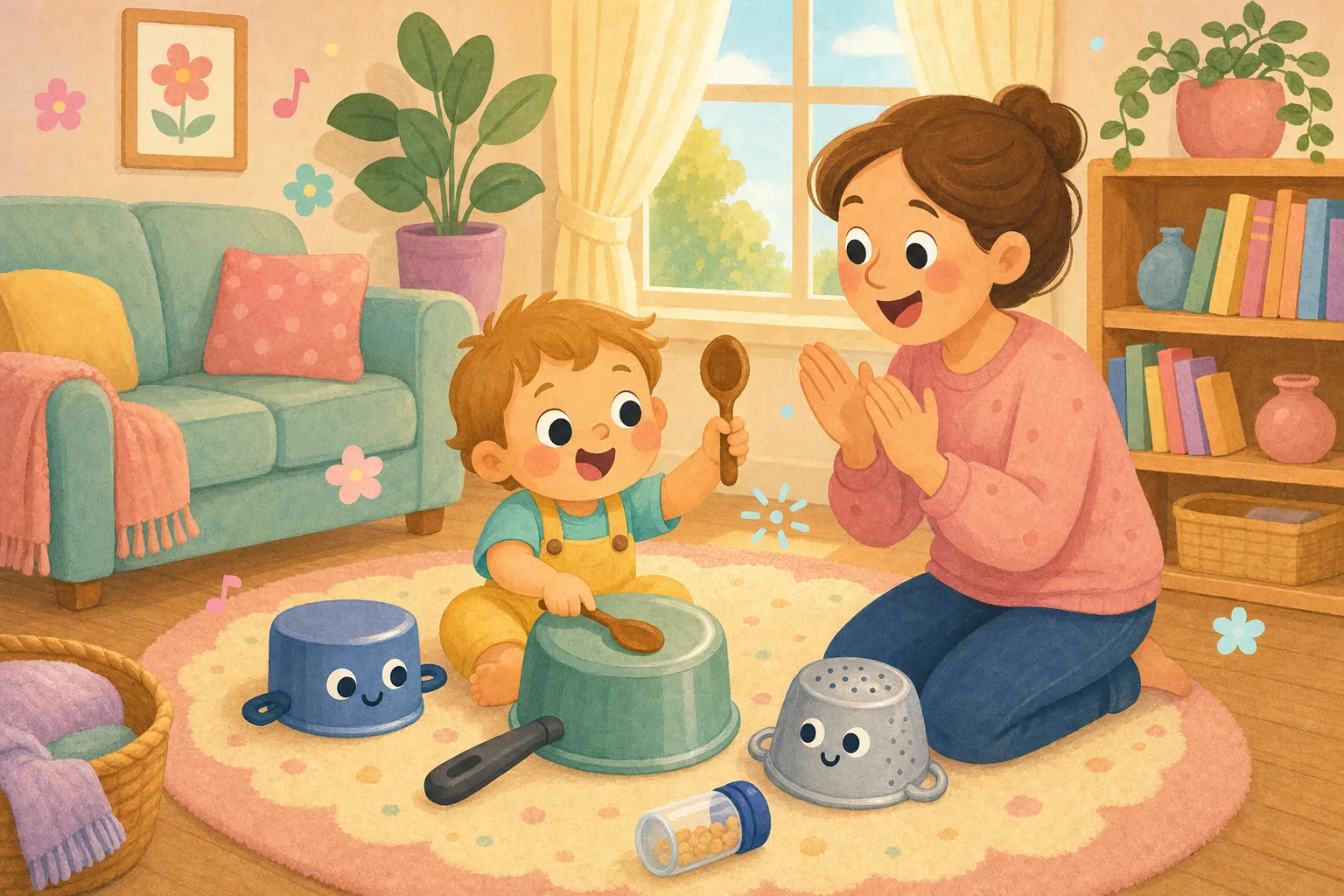
- Kitchen band. A saucepan and wooden spoon, a container of rice with the lid taped on, two plastic cups to clap together. Play along to a favourite song.
- Stop and go. Dance while you sing; freeze when you stop. It’s a playful way to practise a game they will meet in class.
- Whisper and roar. Sing a familiar song very softly, then very loudly. Shy children often enjoy the quiet version first.
For more ideas, see our guide to toddler music activities at home and our rainy-day music games.
How a small, consistent group can help
Many families find that predictability is a shy child’s best friend. When the same faces gather in the same room and the class follows the same rhythm each week, there is less to work out and more room to relax.
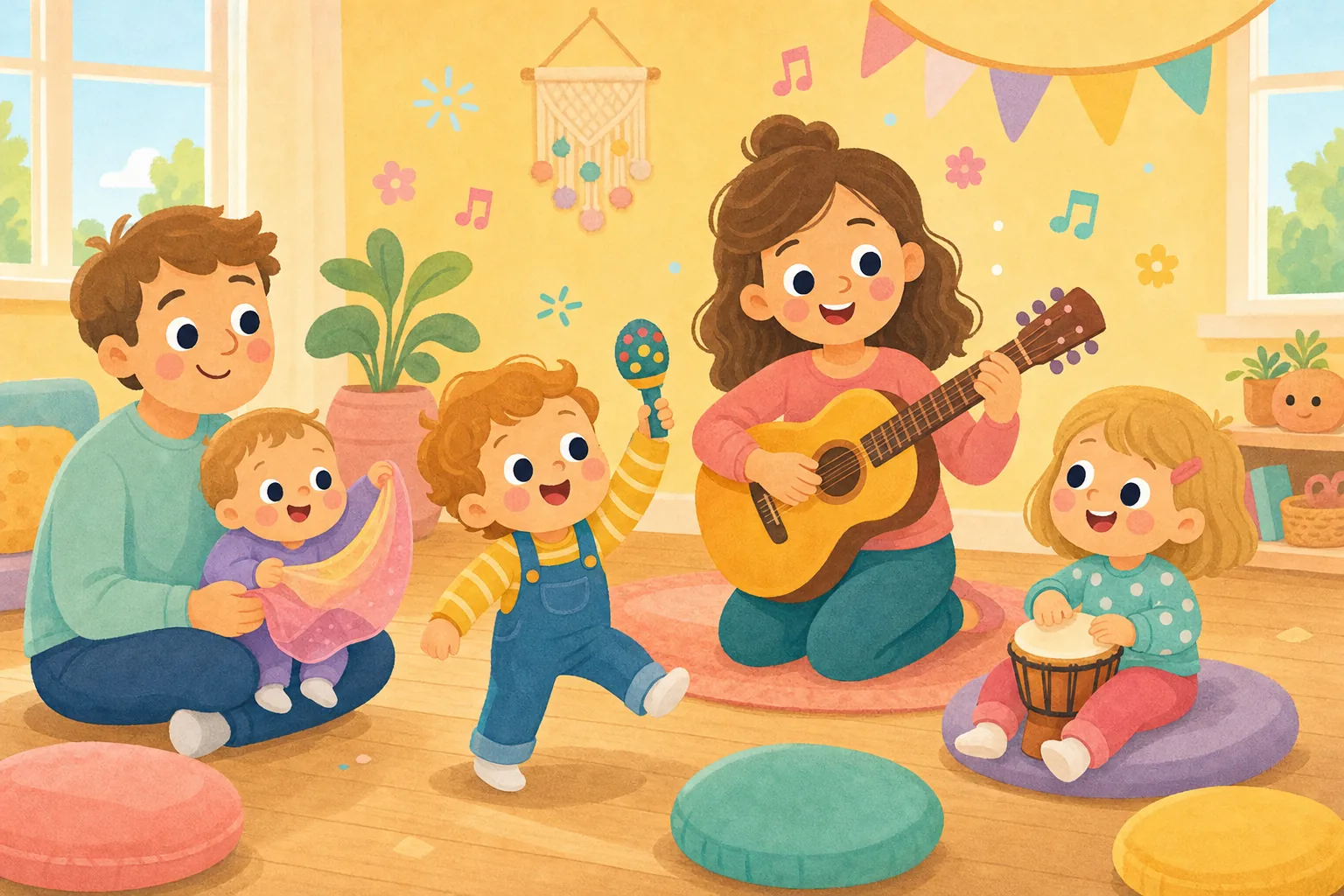
At Cuddle & Sing we aim for small groups of around 8–10 children (never more than 12) and every class follows a familiar routine: a Hello Song, movement, action songs, instruments and a calm goodbye, all with live music. Children are welcome to watch, cuddle, move, explore or take a break. You can read more about this in our approach.
Coming along for a full term, rather than one-off visits, also helps. Week by week the songs become familiar, the teacher becomes a known face and many shy toddlers start to join in more as the term goes on.
When to ask for advice
Shyness on its own is a normal part of who a child is. But you know your child best. If you have any worries about your toddler’s development, communication or wellbeing, have a chat with your GP or Child and Family Health Nurse. They can talk through what you’re noticing and point you to the right support if it’s needed.
And if you’d simply like to talk about how your child might find a class, our team is always happy to hear from you.
Questions parents ask
My toddler just watched the whole class. Is that okay?
Yes, absolutely. Watching is joining in too. Many shy toddlers take in every song and action from a lap and then sing them at home later in the week. Keep coming, keep it low-pressure and let them join in when they are ready.
Should I encourage my shy toddler to join in?
Invite rather than push. Model joining in yourself, offer an instrument and let your child decide whether to take it. Gentle pressure, even well-meant, can make a cautious child hold back more.
Which class suits a shy toddler?
Choose the group that matches your child’s age and stage: Little Movers is for 14–30 months and Music Makers is for 2.5–3.5 years. Ages are a guide, so if you’re unsure, just talk to us.
What if my toddler gets upset during class?
That’s completely normal. You’re welcome to step out for a break and come back whenever you’re ready. The familiar routine often helps children settle back in.
How long does it take a shy toddler to settle into music class?
Every child is different. Some settle in a week or two; others take most of a term. Many families find that coming to the same class each week, with the same faces and routine, helps their child feel at home over time.
This article shares general ideas for families and isn’t medical or developmental advice. Every child is different. If you have questions about your child’s health or development, your GP or Child and Family Health Nurse is a great place to start.
Live music for little ones
Come and sing with us
Cuddle & Sing runs small, musician-led classes for babies and toddlers across Sydney’s North Shore and the Hills, with you right there in the music.