Toddler Music Activities to Try at Home (and Why Families Love Them)
Ten easy toddler music activities to try at home with pots, scarves and your own voice, plus simple ways to adapt them and why so many families love them.
By The Cuddle & Sing team · Published · Last updated · 6 min read
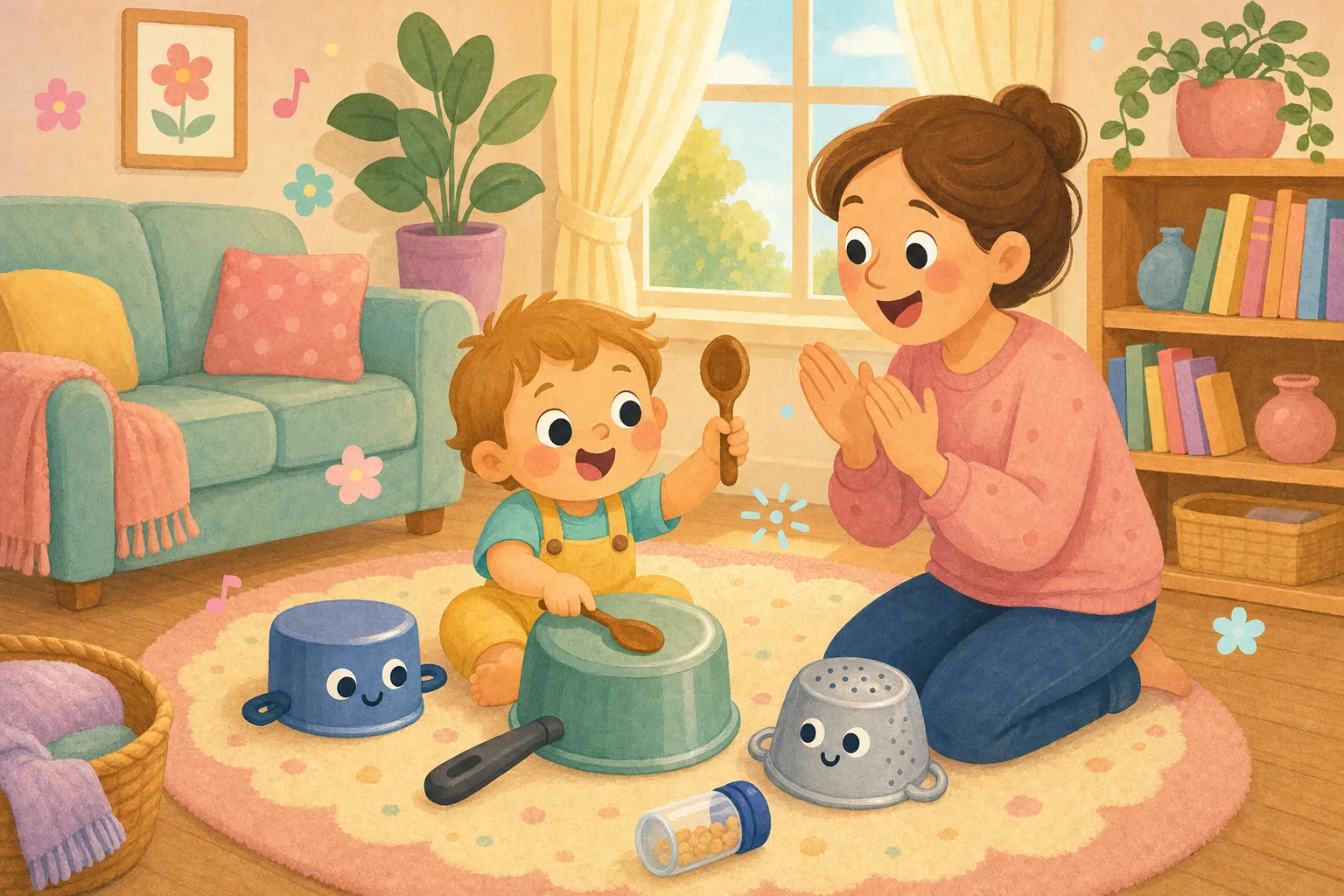
Looking for toddler music activities you can do at home today? The good news is you already have almost everything you need. A wooden spoon, a saucepan, a scarf and your own voice can fill a rainy afternoon, settle a tricky transition or simply give you both a giggle.
Below are ten simple ideas we love, grouped by the kind of play they invite: moving, listening, playing and singing. None of them need special gear, practice or musical training. Take what works for your family, leave what doesn’t and remember that every toddler is different.
The short version
- You don’t need instruments or a good singing voice. Pots, spoons, scarves and your own voice are plenty.
- Short bursts of music work best: five minutes of fun beats a long, planned session.
- Activities are grouped into moving, listening, playing and singing so you can pick what suits the moment.
- Every toddler joins in differently. Watching closely is joining in too.
Before you start: keep it short and playful
Toddlers tend to dive in and out of activities quickly, so think in minutes, not sessions. Two songs before breakfast and a quick dance while the pasta boils count just as much as a big planned play time.
- Follow their lead. If your toddler wants to bang the pot rather than march, go with the pot.
- Repeat, repeat, repeat. Toddlers often love the same song many times over, as familiarity is part of the fun.
- Join in yourself. Your enthusiasm is the best invitation there is.
- Stop while it’s still fun. Ending on a happy note makes it easier to start again tomorrow.
Moving activities: for busy legs and big energy
1. Freeze dance
Put on any music you both enjoy, dance, then pause it and freeze. Toddlers usually find the stop-and-start hilarious. You need: a phone or speaker. Make it easier: freeze together while holding hands. Make it trickier: freeze in a funny shape, like a star or a teapot.
2. Animal walks
Stomp like an elephant to slow, heavy music, tiptoe like a mouse to quiet music and hop like a kangaroo to something bouncy. You need: a bit of floor space. Adapt it: for younger toddlers, carry them and do the movements together; for older ones, let them choose the next animal.
3. Marching band parade
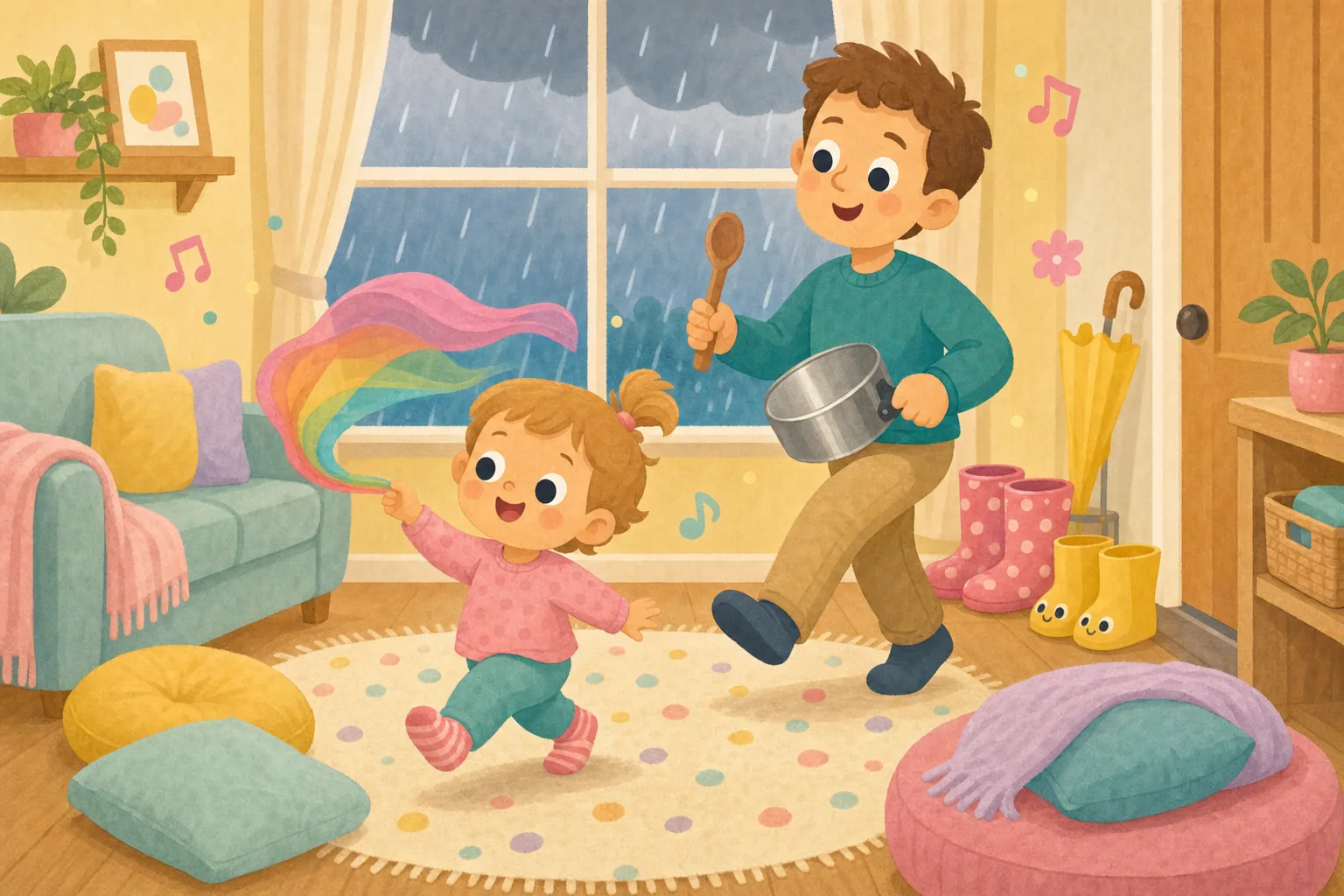
March around the house singing a favourite song, with each of you holding something to shake or tap. Go through every room and wave goodbye at the front door. You need: a song and a “band” item each, such as a spoon or a small plastic container.
Listening activities: noticing sounds together
4. Loud and quiet
Sing or tap a short pattern loudly, then whisper-sing it very quietly. Many toddlers love the contrast and start predicting which is coming next. Musical opposites like loud and quiet or fast and slow are a playful way to practise listening.
5. Sound hunt
Pause and listen for sounds around you: a bird, the kettle, a car going past, the washing machine. Point to your ear, name the sound and copy it with your voice. This works brilliantly on a walk to the park, too.
Playing activities: making your own music
6. Pot-and-pan band
Upturned saucepans, plastic bowls and a wooden spoon make a wonderful drum kit. Tap along to a song, try fast and slow or take turns: you play, then they play. Adapt it: offer a soft scarf to drum with if the noise gets too much for anyone in the house.
7. Homemade shakers
Fill a small, sturdy plastic bottle with dry rice or pasta and shake along to music. Different fillings make different sounds, which is a lovely listening game in itself.
8. Echo clapping
Clap a short pattern (clap, clap, pause) and invite your toddler to copy. Start with two or three claps. If they clap their own pattern instead, copy theirs back. Turn-taking like this is often the very best part.
Singing activities: words, actions and cuddles
9. Action songs
Traditional songs like Head, Shoulders, Knees and Toes, Wheels on the Bus, Incy Wincy Spider and Open Shut Them pair simple words with actions. Toddlers often join in with the actions well before the words and that’s perfect.
10. Make-up-a-verse songs
Take a tune you both know, like Row, Row, Row Your Boat and swap in everyday words: “Brush, brush, brush your teeth” or “Pull, pull, pull your socks”. Silly verses can make getting dressed, tidying up or bath time a little smoother.
Why families love toddler music activities
We hear lots of reasons from parents and carers. Not every reason applies to every family, but these come up again and again:
- Connection. Singing face to face, holding hands for a dance or sharing a giggle over a freeze is time spent fully together.
- An outlet for energy. On a day indoors, a marching parade or animal walk can burn off some of that toddler bounce.
- Routine and calm. A familiar song can signal what comes next: tidy-up time, bath time or bedtime.
- Playing with words. Songs repeat key words and sounds, giving little ones a playful reason to try them out.
- It’s just fun. Music doesn’t need to be “for” anything. Enjoying it together is enough.
If you’re curious about the bigger picture, we share more of our thinking on why music matters and in our gentle guide to early learning through music.
Taking it further: music with other toddlers
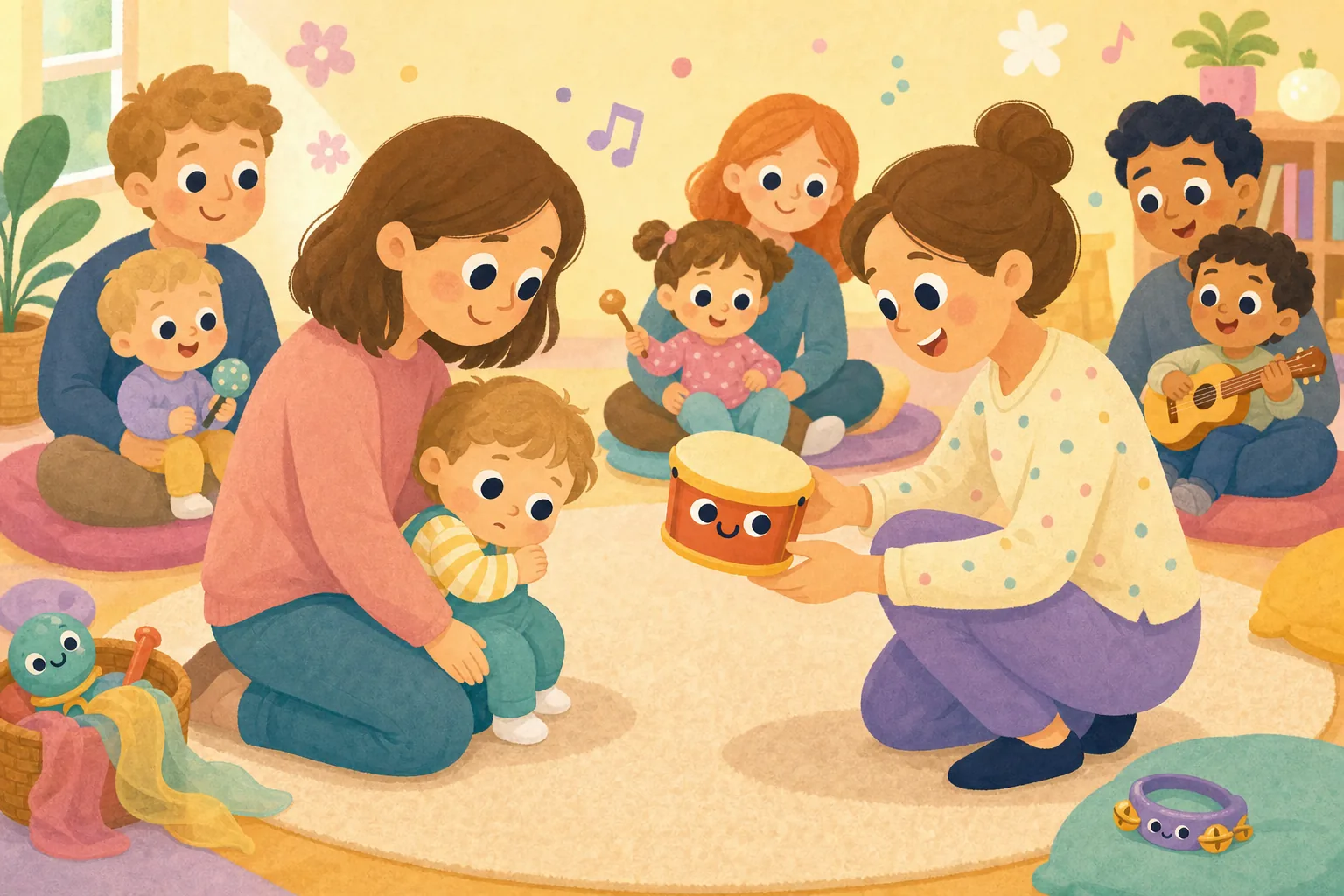
Home music is wonderful on its own. Some families also enjoy a weekly class, where toddlers can watch and copy other children, hear live instruments up close and settle into a familiar routine.
At Cuddle & Sing, our Little Movers classes are designed for 14–30 month olds, with action songs, stop/go games and rhythm copying, many of the same ideas above, with live music and a small group. A parent or carer stays for the whole class and children are always welcome to watch first. You can find a class near you or read what to expect from weekly classes.
Questions parents ask
What are some easy toddler music activities to do at home?
Freeze dance, a pot-and-pan band, animal walks to music, echo clapping and action songs like Head, Shoulders, Knees and Toes are all easy to start with. None need special equipment, just a little floor space and your voice.
Do I need to be a good singer to do music with my toddler?
Not at all. Toddlers love the voices of the people they know best. Hum, speak-sing or sing slightly off-key. Your enthusiasm matters far more than your pitch.
How long should toddler music activities last?
A few minutes is plenty. Toddlers tend to move in and out of activities quickly, so short bursts through the day often work better than one long session.
Are homemade shakers safe for toddlers?
They can be, with care. Use a sturdy container, seal the lid tightly with tape, check it often for cracks and always supervise. Small fillings like rice can be a choking hazard if the shaker opens.
My toddler just watches instead of joining in. Is that OK?
Yes. Lots of toddlers like to watch first and join in later, sometimes days later. Watching is a way of taking part. Keep the music going without pressure and let them come to it in their own time.
This article shares general ideas for families and isn’t medical or developmental advice. Every child is different. If you have questions about your child’s health or development, your GP or Child and Family Health Nurse is a great place to start.
Live music for little ones
Come and sing with us
Cuddle & Sing runs small, musician-led classes for babies and toddlers across Sydney’s North Shore and the Hills, with you right there in the music.