Early Learning Through Music: A Gentle, Pressure-Free Introduction
What early learning through music can look like for babies and toddlers (listening, moving, turn-taking and songs together), with no pressure or big promises.
By The Cuddle & Sing team · Published · Last updated · 6 min read
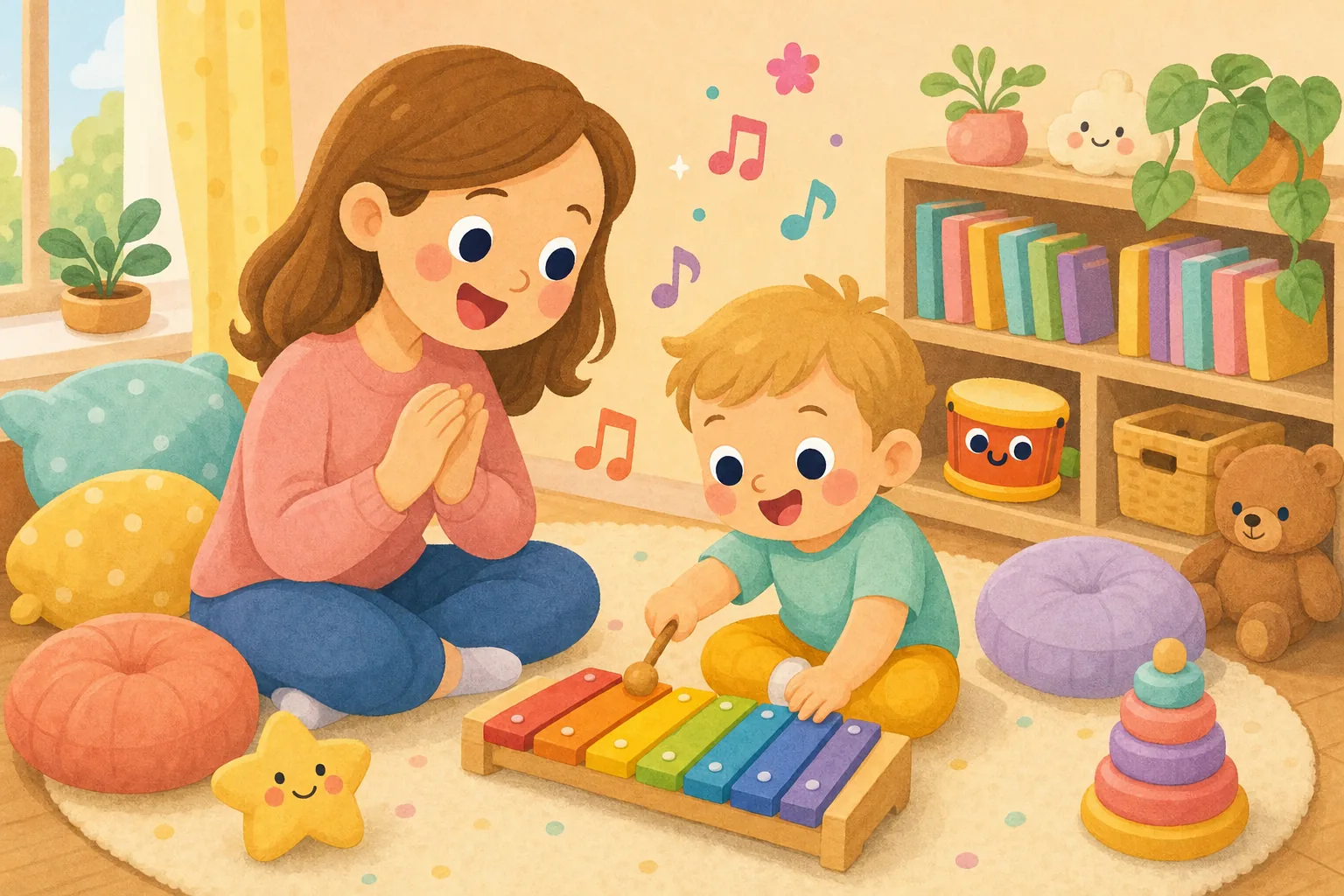
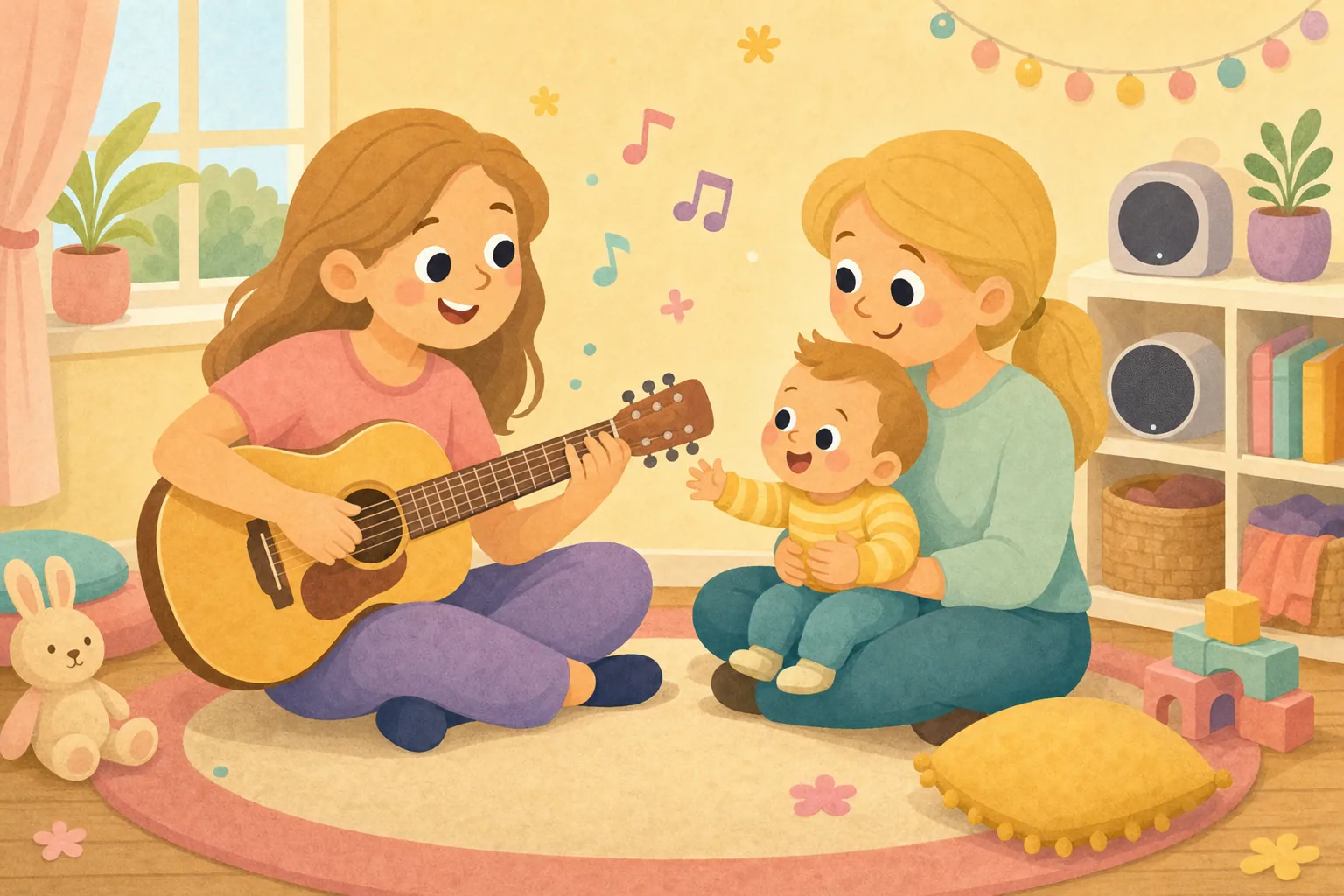
Early learning through music, for babies and toddlers, usually looks a lot like play. It’s a baby turning towards a song, a toddler stomping in time (or not quite in time), a pause before the last word of a rhyme that your child fills in. It isn’t about lessons, flashcards or getting ahead. It’s about sharing music together in everyday moments.
There’s plenty of noise online about music making babies “smarter”. We’d rather keep things honest and gentle. In this guide, we look at what music with little ones can realistically offer, a few myths worth letting go of and simple ways to fit more music into your week without any pressure at all.
The short version
- Early learning through music is mostly everyday play: listening, moving, taking turns and singing together.
- You don’t need special products, lessons or a trained voice. Your attention matters most.
- Every child is different, so enjoy music for its own sake rather than chasing milestones.
- Trusted, plain-English parenting sources like Raising Children Network are a good place to read more.
What “early learning through music” really means
When we talk about early learning through music, we mean the many small, natural things that happen when adults and children make music together. Nothing needs to be taught. These moments simply tend to show up:
- Listening. Turning towards a sound, noticing when the music stops, hearing loud and quiet.
- Moving. Bouncing, swaying, clapping, marching and spinning in a safe space.
- Taking turns. You tap, they tap. You sing a line, they wait for theirs.
- Words in songs. Songs repeat key words and sounds, giving little ones a playful reason to try them.
- Shared attention. Looking at the same drum, the same scarf or the same face, together.
None of these come with a checklist or a timeline. Every child is different and many families find the real gift is simply time spent enjoying something together.
Why music and young children go so well together
Researchers and educators have long been interested in music and young children and it’s easy to see why. Music is one of the few activities a baby and an adult can genuinely share from the very beginning. A lullaby works for a newborn and still works for a three-year-old.
Music also carries its own structure. A song has a beginning and an end, a chorus that comes back and a beat you can feel. For little ones, that predictability can be comforting. They come to know what happens next, which is part of why the same song can be requested a dozen times in a row.
We’re careful not to make claims beyond that. We don’t promise that music will speed up talking, walking or anything else. What we see, week after week, is that families enjoy it and enjoying something together is worthwhile on its own.
Myths worth letting go of
Myth 1: You need “smart baby” products
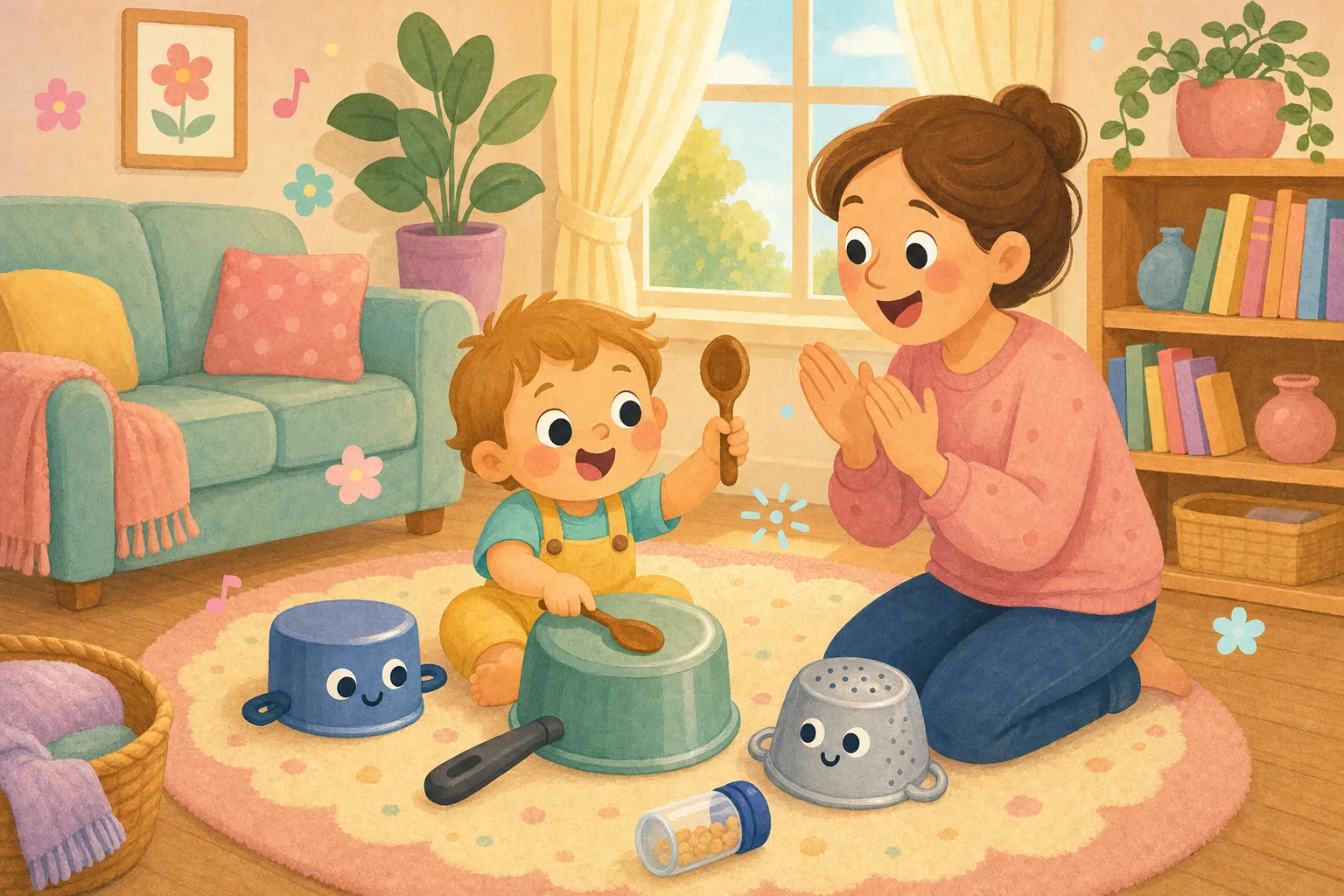
Special playlists, apps and gadgets marketed for clever babies aren’t necessary. Your voice, your face and a wooden spoon on a saucepan are more than enough.
Myth 2: You need to be a good singer
Babies and toddlers love the voices of the people they know best, wobbly notes and forgotten words included. Humming or speak-singing counts too.
Myth 3: Your child should perform
There’s no need for little ones to sing on cue, play “properly” or join in every time. Watching, listening and wandering off are all part of how young children experience music.
Myth 4: Earlier and more is always better
Music works best as a relaxed, enjoyable part of the day, not another task. If you’re both tired, a quiet lullaby is plenty or nothing at all.
Simple, everyday ways to bring music into your day
You don’t need to set aside special time. Try weaving music into moments you already have:
- Nappy changes: sing a short body-part song: toes, knees, tummy, nose.
- In the pram or car: sing along to something you love or make up a song about what you can see.
- Tidy-up time: use the same tidy-up song every day so it becomes a gentle cue.
- Bath time: try Five Little Ducks or Row, Row, Row Your Boat with splashing actions.
- Bedtime: a slow, familiar lullaby can become part of your wind-down routine.
For more ideas, see our toddler music activities to try at home and our guide to bedtime songs and wind-down routines.
What music looks like at different ages
Ages are only a rough guide, but this is what music often looks like as children grow:
- Babies (around 6–14 months): lap bounces, touch-and-tickle songs, listening to gentle instruments and grasping shakers or scarves.
- Toddlers (around 14–30 months): action songs, stop/go games, marching and copying simple rhythms.
- Older toddlers (around 2.5–3.5 years): musical opposites like fast and slow, story-songs, longer rhythm patterns and choosing what comes next.
These stages line up with our three age groups, but children move at their own pace. If your child doesn’t fit neatly into a box, that’s completely normal.
Where to read more
If you’d like reliable, plain-English information about play and development, Raising Children Network is a well-known Australian parenting website worth exploring. For any questions or worries about your child’s development, your Child and Family Health Nurse or GP is the right person to talk to.
You can also read more about our approach and why music matters to us.
Music together, with Cuddle & Sing
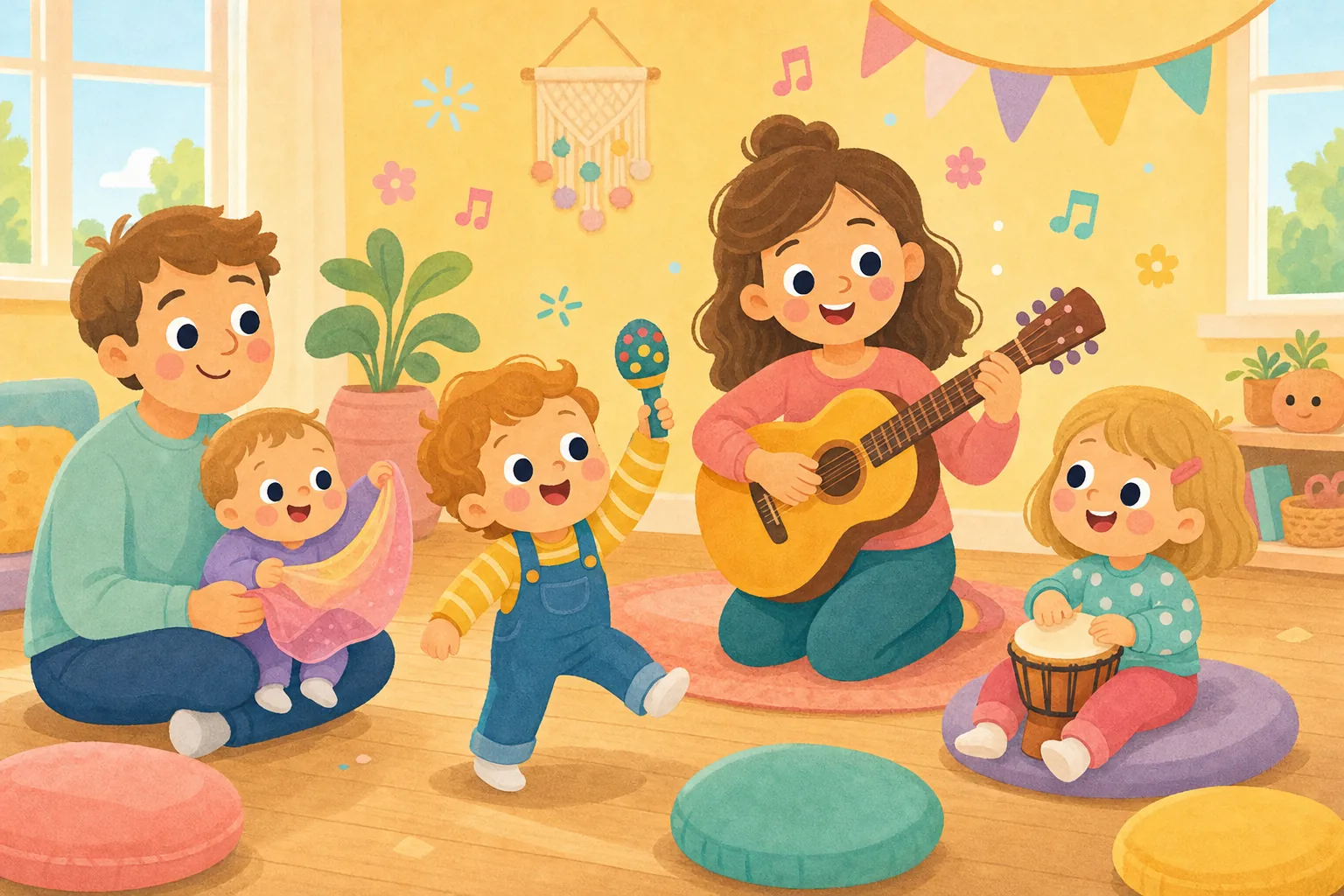
Cuddle & Sing runs live music and movement classes for babies and toddlers across Sydney’s North Shore and the Hills District. A parent or carer stays for the whole class, groups are small and every class follows the same comforting routine, from the Hello Song to a calm goodbye. Children are always welcome to watch, cuddle, move or take a break. If you’d like to see what it feels like, new families can start with an introductory class.
Questions parents ask
What is early learning through music?
For babies and toddlers, it’s the everyday play that happens when you share music together: listening, moving, taking turns, singing words and paying attention to the same thing. It doesn’t need lessons or special equipment.
Will music make my baby smarter?
We don’t make that promise and we’d be wary of anyone who does. Every child is different. What many families find is that music is a joyful, connecting thing to do together and that’s reason enough.
When can I start music with my baby?
You can sing to your baby from day one. Lullabies, gentle humming and simple rhymes suit even the youngest babies. Our Baby Tunes classes welcome babies from around 6 months.
Do I need to buy instruments?
No. Your voice and household items like pots, spoons and plastic containers are plenty. If you make homemade shakers, seal them tightly and always supervise, as small fillings can be a choking hazard.
Where can I find trustworthy information about child development?
Raising Children Network is a well-known Australian parenting resource. For specific questions or concerns about your child, talk to your Child and Family Health Nurse or GP.
This article shares general ideas for families and isn’t medical or developmental advice. Every child is different. If you have questions about your child’s health or development, your GP or Child and Family Health Nurse is a great place to start.
Live music for little ones
Come and sing with us
Cuddle & Sing runs small, musician-led classes for babies and toddlers across Sydney’s North Shore and the Hills, with you right there in the music.